Table of Contents
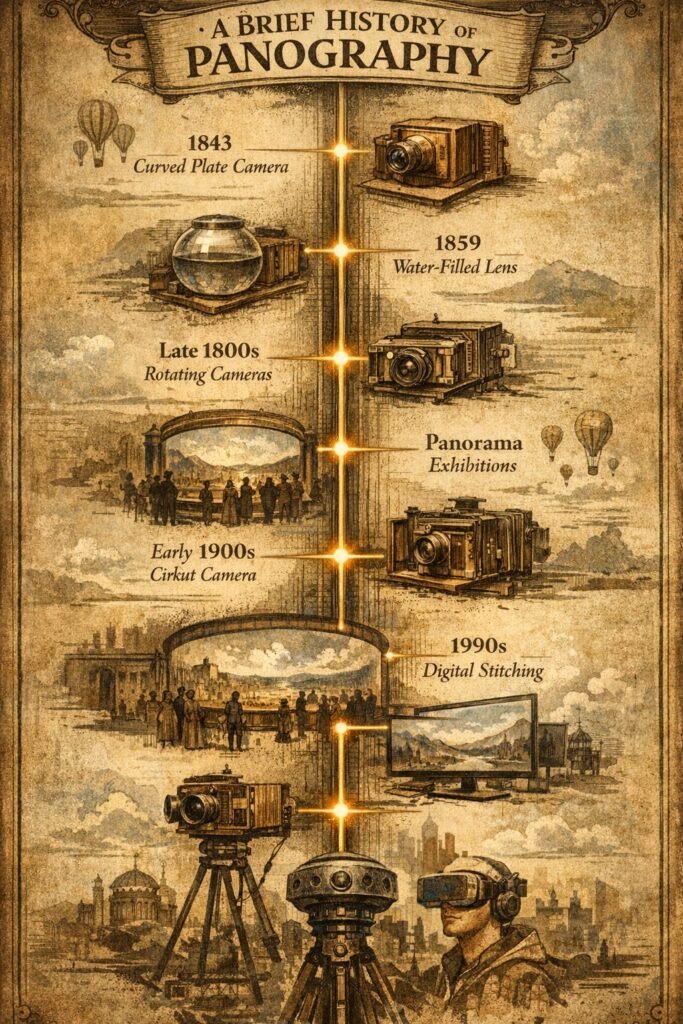
Long before the first shutter clicked, the human eye craved a view that the standard canvas couldn’t contain. The story of panography isn’t just a timeline of cameras; it is the history of our attempt to capture the ‘total’ experience of a landscape. From the massive, hand-painted circular rooms of the 1780s to the meticulously stitched glass plates of the American Civil War, panography evolved as a tool of both immersion and record. This exploration traces the technical breakthroughs and the artistic daring that allowed us to finally see the world in its full, panoramic breadth.
Understanding Panography: The Art of the Panorama
Panography is the process of merging multiple images or using specialized techniques to produce wide-angle or 360-degree visuals. Early pioneers sought to replicate the grandeur of sweeping landscapes and complex urban scenes in ways that single-image formats could not.
Key Drivers in Panography’s Early Development
- The need to visually represent large-scale scenes in detail.
- Technical innovations in photography and panoramic equipment.
- The merging of art and science to document and narrate compelling stories.


The Role of Painted Panoramas and Panoramic Maps
The Pre-Photography Era



Before the invention of photography, panoramic artworks dominated. Scottish artist Robert Barker popularized the term “panorama” in the late 18th century with his massive circular paintings, including his celebrated depictions of Edinburgh. These weren’t simple wide views—they were immersive environments, towering canvases that wrapped the viewer in a continuous horizon. Visitors stood at the center of a rotunda and experienced the city as a seamless 360‑degree world, free from the edges and borders that defined traditional art.
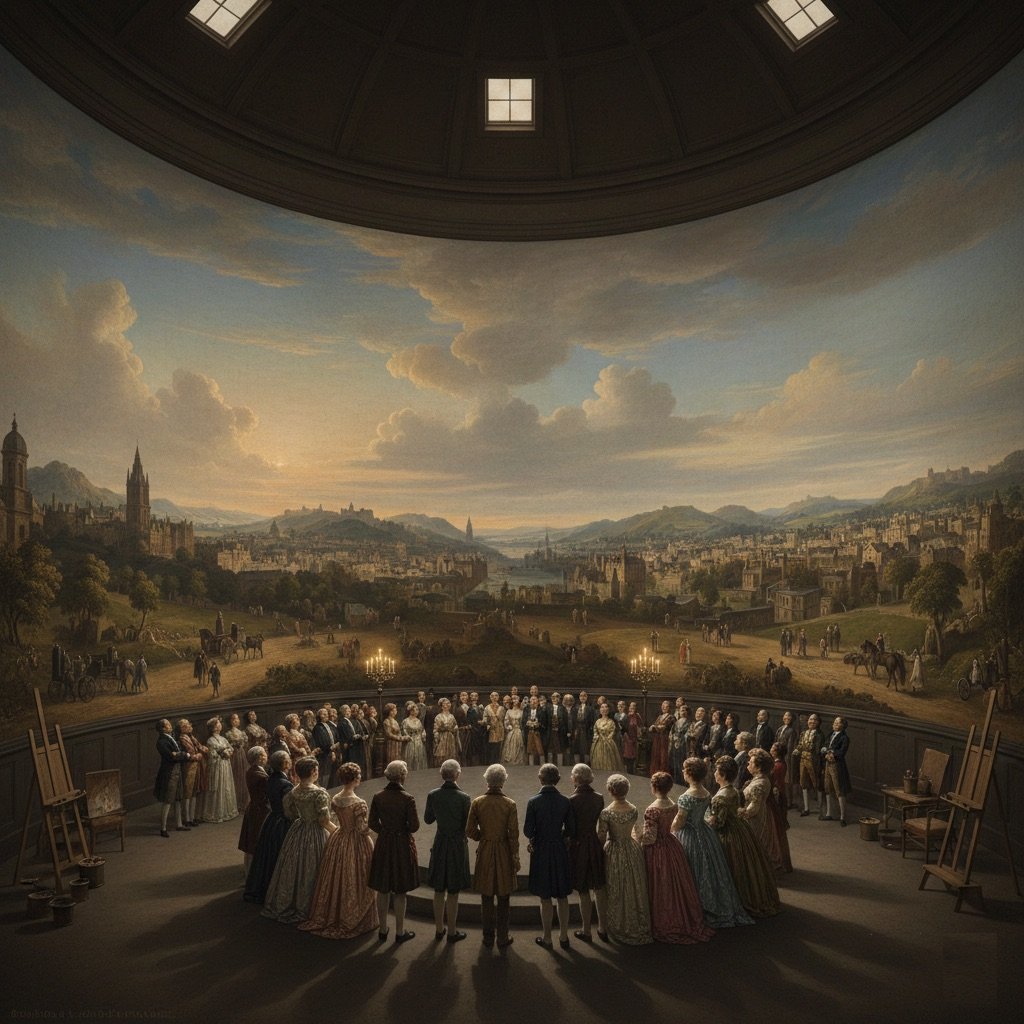
Barker’s innovation wasn’t just technical; it was philosophical. He understood that human vision is inherently panoramic, shaped by peripheral awareness and the instinct to scan a landscape from left to right. His circular paintings captured not a single moment, but the total atmosphere of a place—the shifting weather, the layered architecture, the lived rhythm of the city. In many ways, Barker laid the groundwork for the panographic mindset: the belief that a scene is best understood when its full breadth is honored.
These early panoramas became cultural spectacles across Europe and America. Travelers queued to experience distant cities, battlefields, and natural wonders rendered at monumental scale. Long before film or photography, these painted horizons offered a form of virtual travel, allowing viewers to step into another world and feel its spatial presence. The rotunda became a precursor to the modern panoramic image—a space where art, geography, and immersion converged.
This era established the foundation for panography as we know it today. The desire to capture the full sweep of a place, to translate lived experience into a continuous visual arc, began not with a camera, but with a brush, a scaffold, and a canvas that refused to end.
Panoramic Maps: Bird’s-Eye View Masterpieces
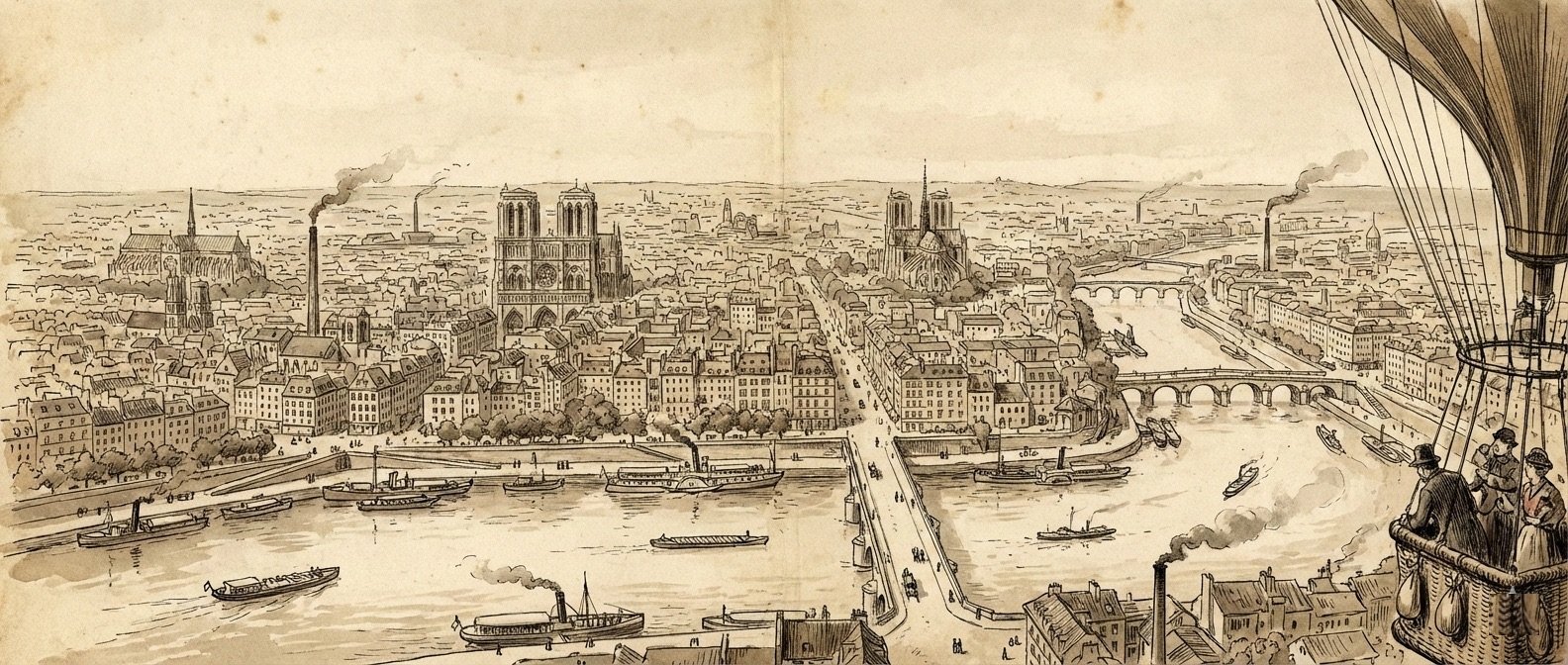
Panoramic maps emerged as a popular visual medium in the 19th century, blending cartography with fine art to create sweeping bird’s‑eye depictions of cities and towns. Unlike traditional maps, which flattened geography into symbols and grids, these elevated views imagined the landscape from an impossible vantage point—high above the rooftops, drifting over streets, rivers, rail lines, and public squares.
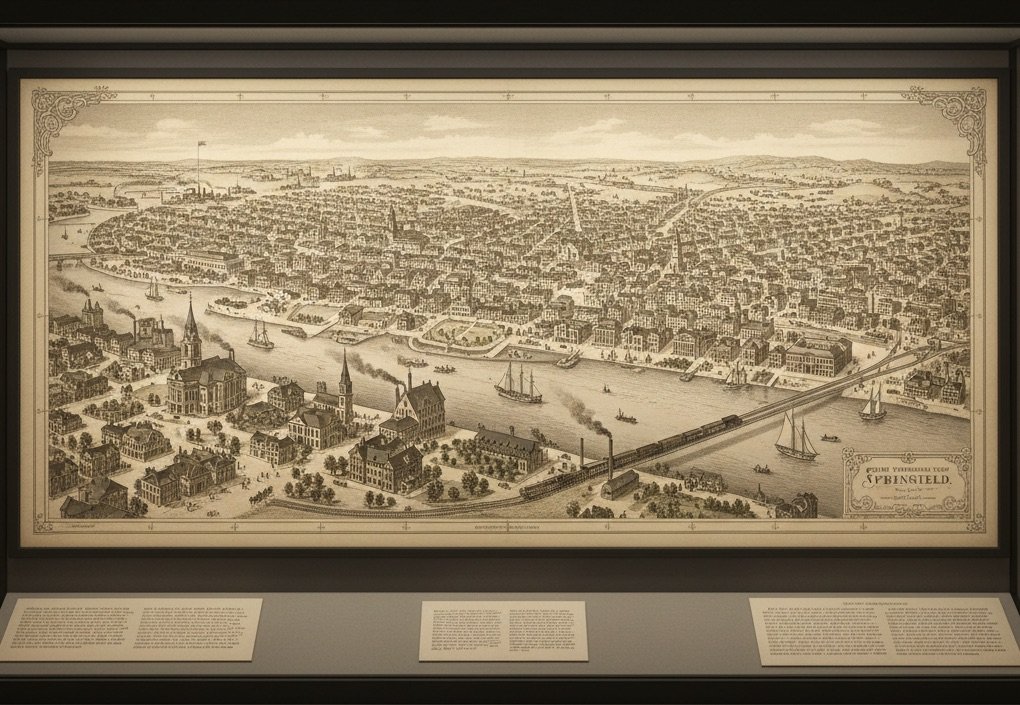
Artists and draftsmen constructed these scenes with remarkable detail, often walking every block of a city to sketch its architecture before assembling the final wide‑angle composition. The result was a panoramic portrait that felt both factual and atmospheric, capturing not only the layout of a place but its character, industry, and cultural rhythm.
These maps became powerful tools for tourism, civic pride, and urban promotion. Cities used them to showcase growth, prosperity, and architectural ambition, distributing them in train stations, hotels, and public offices. For travelers, panoramic maps offered a way to understand a city’s spatial story before ever setting foot in it. For residents, they became cherished keepsakes—visual celebrations of home rendered in sweeping, horizon‑like form.
In many ways, these bird’s‑eye masterpieces were early expressions of the panographic impulse: the desire to see a place in its entirety, to honor its breadth, and to translate the lived experience of moving through a city into a single, expansive view.

The Birth of Photography and Its Impact on Panography
The Invention of Photography in 1839
Louis Daguerre’s daguerreotype process in 1839 revolutionized visual documentation. For the first time, the world could be captured with a level of precision that no brush or engraving could match. These early images—etched onto silver‑plated copper sheets—held an almost uncanny clarity, revealing textures, architectural details, and atmospheric nuances that had previously lived only in memory or artistic interpretation.
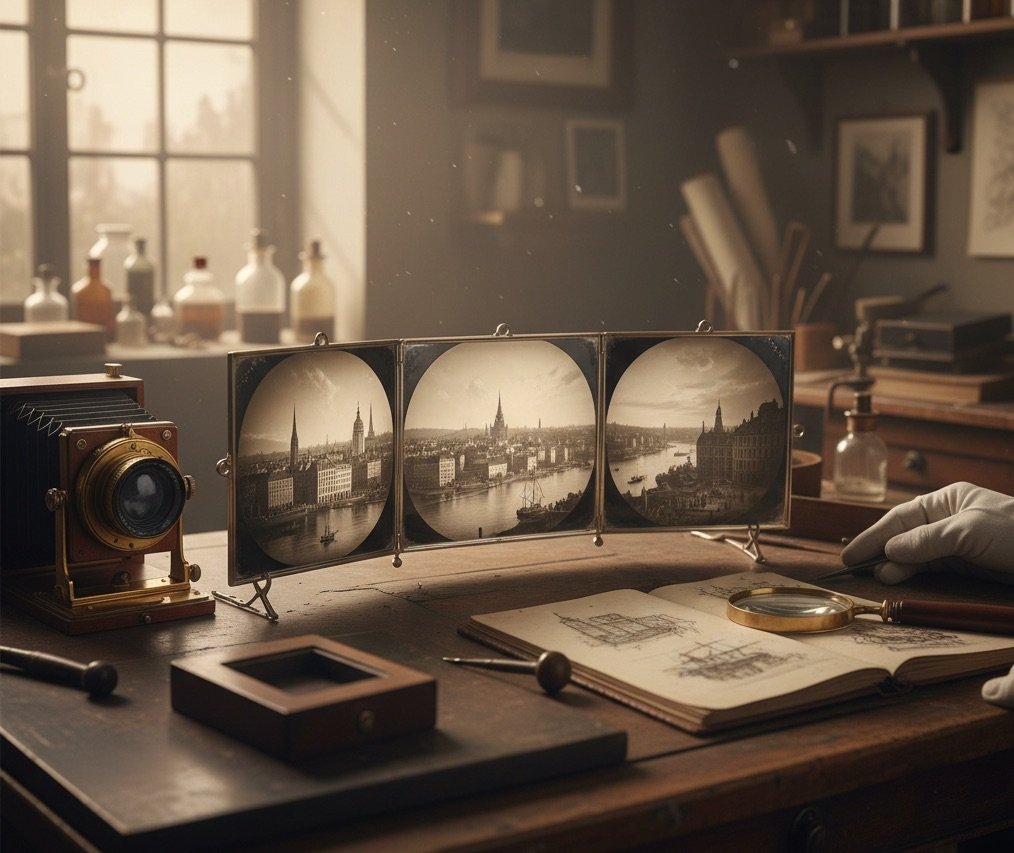
Though the daguerreotype was not inherently panoramic, it set the stage for panoramic photography by proving that light itself could be fixed, studied, and expanded. Artists and inventors quickly recognized the potential: if a single plate could hold such detail, then a sequence of plates might hold the breadth of a horizon. Early practitioners began experimenting with side‑by‑side exposures, aligning multiple daguerreotypes to form extended cityscapes and sweeping landscapes.
This shift marked a turning point. The panoramic impulse—once expressed through monumental paintings and rotunda installations—found a new medium in photography. Daguerre’s invention didn’t just change how we recorded the world; it changed how we imagined the possibilities of wide‑format seeing. It opened the door for the rotating cameras, curved plates, and mechanical innovations that would soon define the early era of true photographic panoramas.
Early Panoramic Techniques with Daguerreotypes
- Photographers placed two or more daguerreotype plates side by side to create wider views.
- These stitched images offered the first photographic panoramas, capturing landscapes and cityscapes in remarkable detail.
Famous Example: The 1851 View of San Francisco



A groundbreaking panoramic image of San Francisco in 1851 was created using five daguerreotype plates. At a time when the city was transforming almost overnight during the California Gold Rush, this sweeping composition offered an unprecedented visual record of a place in rapid motion. Each plate captured a fragment of the booming port town—its wooden piers, clustered storefronts, rising hills, and the restless energy of a settlement becoming a metropolis.

When assembled, the five plates formed an expansive, meticulously detailed panorama that revealed the full breadth of San Francisco’s early urban landscape. It was more than a technical achievement; it was a cultural document, preserving the atmosphere of a frontier city on the cusp of global significance. The image stands today as one of the earliest examples of photographic panography in the United States, demonstrating how even the earliest cameras were pushed to their limits in the pursuit of the wide view.
Innovations in Panoramic Photography
Panoramic Cameras Begin to Emerge
Panoramic cameras began to emerge as soon as photographers realized that a single plate or frame could never contain the full sweep of a landscape or the layered complexity of a city. The desire for seamless, uninterrupted horizons pushed inventors to design cameras capable of capturing wide‑angle views in one fluid motion. These early devices replaced the painstaking practice of aligning multiple images by hand, allowing artists to record the world with a new sense of continuity and scale.
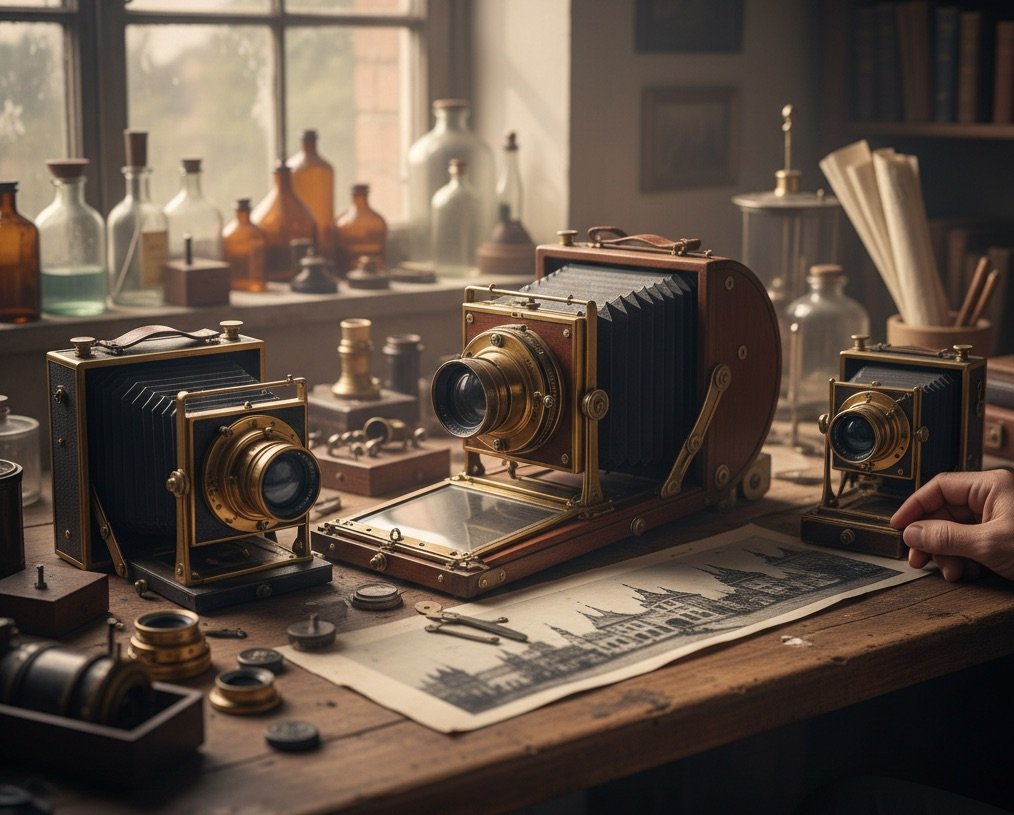
What made these cameras remarkable was not just their mechanical ingenuity, but the shift in mindset they encouraged. Instead of thinking in isolated fragments, photographers could finally approach a scene as a unified arc—an unbroken gesture of place. Rotating bodies, curved film planes, and clockwork mechanisms allowed the camera itself to mimic the slow turn of the human head, translating lived experience into a single panoramic sweep. This innovation made wide‑format seeing more accessible, inviting more artists, travelers, and documentarians to explore the horizon as a complete visual story rather than a collection of parts.
Key Milestones
- Joseph Puchberger’s Patent (1843): One of the earliest panoramic camera designs, featuring a rotating lens and curved plate.
- Thomas Sutton’s Panoramic Camera (1859): Introduced improved precision with its rotating mechanism and wide-angle lens.


The Al-Vista Camera (1898)
Introduced in 1898, the Al‑Vista camera became a breakthrough in the late 19th century. Unlike the heavy, tripod‑bound panoramic devices that came before it, the Al‑Vista was portable, approachable, and designed for real travel. Its curved film plane and swing‑lens mechanism allowed photographers to capture sweeping views with a single, fluid exposure—no darkroom assembly, no manual alignment, no technical gymnastics.
For the first time, amateurs could step into the world of wide‑format seeing with a camera that felt intuitive in the hand. Professionals embraced it as well, appreciating its ability to record landscapes, fairs, parades, and bustling city streets with a clarity and immediacy that earlier panoramic systems struggled to achieve. The Al‑Vista democratized the panoramic impulse, making it possible for travelers, artists, and everyday observers to document the full breadth of a place as they experienced it.

Why It Stood Out
- Captured wide-angle images with ease.
- Popularized the use of panoramic cameras in everyday photography.

Its arrival marked a cultural shift: panoramas were no longer rare spectacles created only by specialists. They became part of the visual language of the era, carried in satchels, taken on excursions, and used to capture the expanding modern world in all its horizontal sweep.
Eastman Kodak’s Contributions to Panoramic Photography
The #4 Kodak Panoram Camera
In 1899, Eastman Kodak introduced the #4 Kodak Panoram, a camera that reshaped the future of wide‑format seeing. Its simple swing‑lens design and approachable mechanics meant that panoramic photography was no longer reserved for specialists or studio technicians. Suddenly, the sweeping horizon became something anyone could capture—travelers, families, Sunday wanderers, and young artists discovering the world through a broader frame.
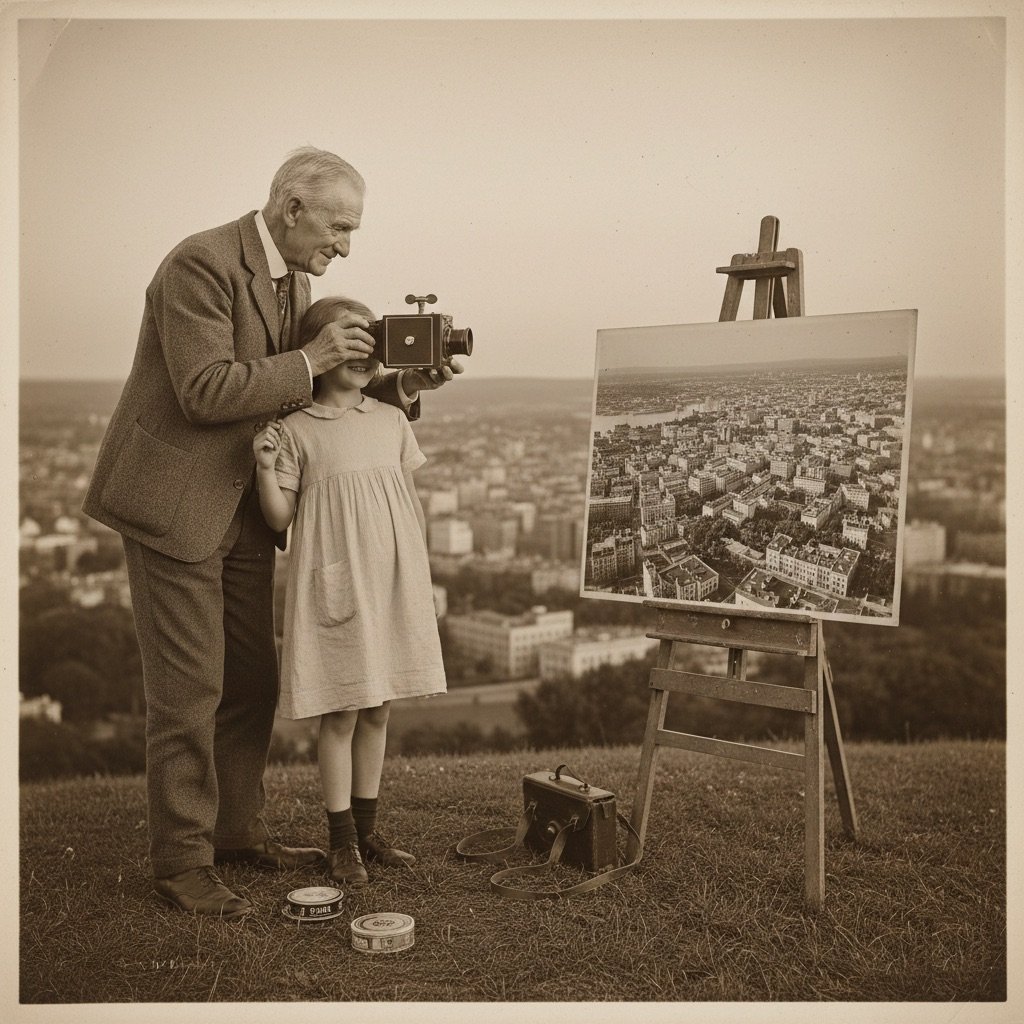
What made the #4 Panoram so transformative was its affordability and ease of use. It required no elaborate setup, no darkroom gymnastics, and no technical mastery. A gentle pivot of the wrist was enough to record a continuous arc of landscape or cityscape, turning everyday outings into panoramic opportunities. This accessibility helped panoramic imagery move from exhibition halls and scientific expeditions into the hands of ordinary people, expanding the cultural appetite for wide‑format storytelling.
Significance
- Accessibility: Made panoramic photography achievable for amateurs.
- Technical Simplicity: Eliminated the need for extensive technical expertise or editing.
The #4 Panoram marked a shift in photographic culture: the panorama became democratic. It encouraged a generation of photographers to look beyond the center, to follow the line of the horizon, and to embrace the full sweep of the world as it unfolded from left to right.
The Cirkut Camera: A Revolution in Wide-Angle Photography
Patent and Features (1904)

The Cirkut camera, patented in 1904, became the pinnacle of early panoramic technology. Where earlier swing‑lens devices offered partial sweeps, the Cirkut delivered something far more ambitious: a full 360‑degree rotation capable of capturing an unbroken, continuous view on large‑format film. Its clockwork mechanism turned the entire camera body while advancing the film at a perfectly synchronized rate, producing panoramas of extraordinary length and clarity.
This was more than a technical achievement—it was a cultural one. The Cirkut allowed photographers to document entire city blocks, industrial complexes, military encampments, and sweeping natural vistas with a level of detail that felt almost architectural. Standing before a Cirkut print was like stepping into the center of a moment, surrounded by the world as it existed on that day.
Applications
- Event Photography: Captured expansive group shots, such as crowds or gatherings.
- Landscapes and Urban Scenes: Showcased sweeping vistas in high detail.
- Industrial and Military Use: Documented land surveys and strategic sites.
For traveling artists and early documentarians, the Cirkut camera became a tool of total immersion. It honored the panoramic impulse at its most expansive, capturing not just a horizon but the full circumference of place. Its images remain some of the most ambitious wide‑format records of the early 20th century, a testament to the era’s fascination with scale, precision, and the boundless sweep of the world.
Cultural and Historical Impact of Early Panography
Documenting History
Early panographic techniques offered a perspective that no other medium of the time could match. While traditional photographs captured isolated moments, panoramic images revealed the full spatial context of an event or environment. Cities in the midst of rapid industrial growth were recorded in sweeping arcs that showed factories, rail lines, neighborhoods, and skylines in a single continuous view. Military encampments, world’s fairs, parades, and civic gatherings were preserved not as fragments but as living tapestries, allowing future generations to understand the scale, density, and atmosphere of historic moments.
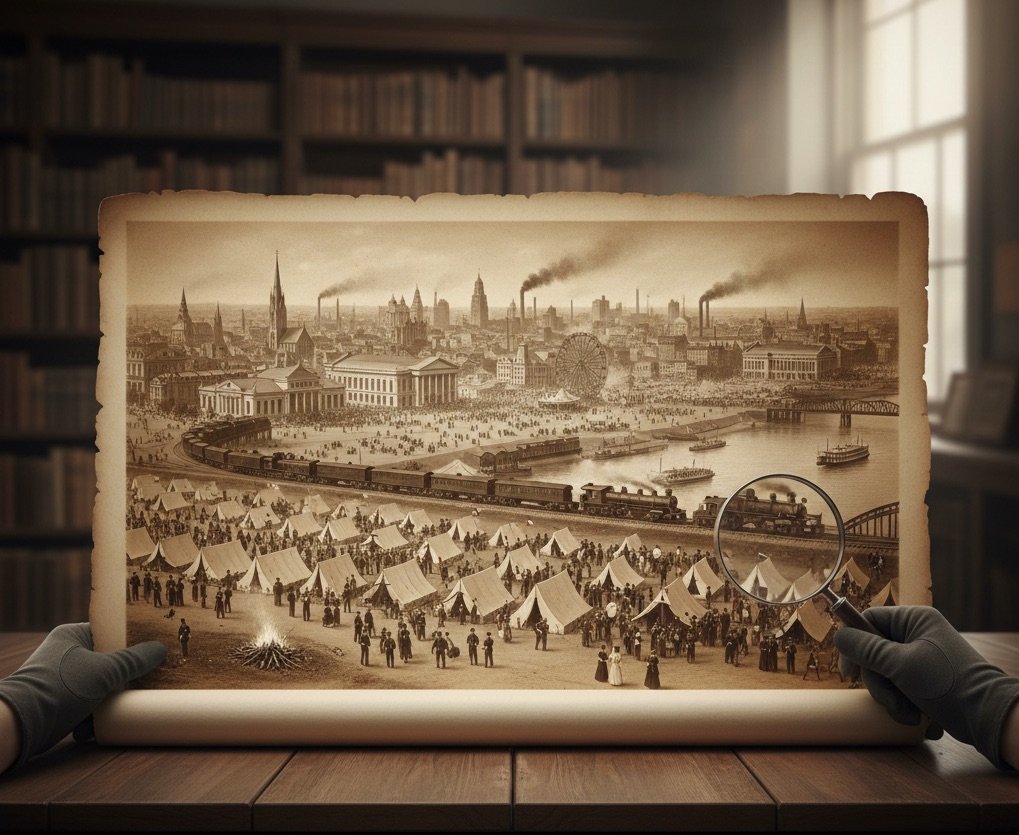
These wide‑format records became invaluable cultural documents. They showed how communities expanded, how architecture evolved, and how societies organized themselves across space. In many ways, early panoramas functioned as visual archives of modernization itself.
Legacy
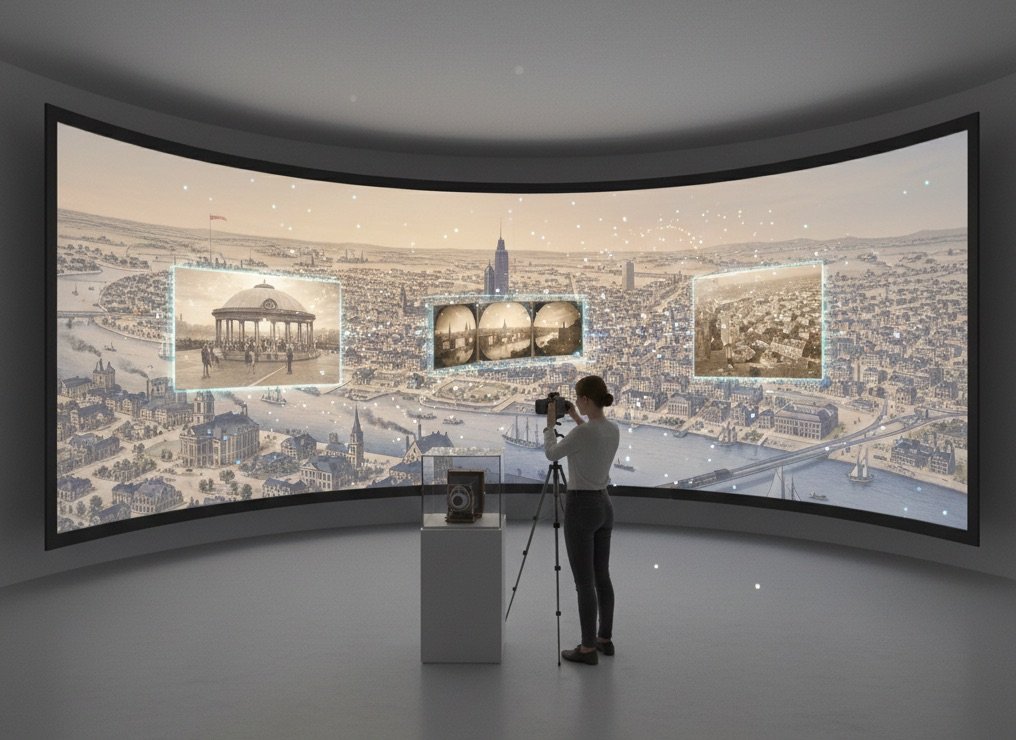
The legacy of early panography extends far beyond the photographs and painted rotundas that survive today. These innovations inspired the creation of immersive visual experiences, from 19th‑century panorama halls to the multi‑screen installations and virtual environments of the contemporary era. The desire to step inside an image—to feel surrounded by place—can be traced directly back to the panoramic impulse.
Early panoramic tools also paved the way for modern panoramic and 360‑degree photography, influencing everything from rotating film cameras to digital stitching algorithms and VR mapping systems. The instinct to widen the frame, to honor the full sweep of the horizon, remains a defining thread in visual culture.
Panography’s early pioneers didn’t just expand the photographic format; they expanded the way we understand and interpret the world. Their work continues to shape how artists, travelers, and documentarians approach space, memory, and the spirit of place.
Frequently Asked Questions About Early Panography
What inspired the earliest forms of panography?
Early panography grew from the human desire to capture the full sweep of a landscape, a drive reflected in the document’s opening line: “the human eye craved a view that the standard canvas couldn’t contain.”
How did painted panoramas influence photographic panoramas?
Painted panoramas created immersive 360‑degree environments long before photography, establishing the idea that a scene could be experienced as a continuous horizon rather than a framed image.
Why were panoramic maps so culturally significant in the 19th century?
Panoramic maps blended cartography and art to give viewers an elevated, impossible vantage point, helping travelers and residents understand a city’s layout, character, and growth at a glance.
How did daguerreotypes contribute to the development of photographic panoramas?
Daguerreotypes introduced unprecedented visual precision, and photographers soon began placing multiple plates side by side to create extended cityscapes and landscapes, forming the first photographic panoramas.
What made early panoramic cameras revolutionary?
Rotating bodies, curved plates, and swing‑lens mechanisms allowed photographers to capture wide‑angle scenes in a single motion, shifting the mindset from fragmented images to unified, sweeping views.
Why is the Cirkut camera considered a milestone in panoramic history?
The Cirkut camera could rotate a full 360 degrees while synchronizing film movement, producing extraordinarily detailed, continuous panoramas that documented cities, landscapes, and events with unmatched scale.
Panography.org | PLACES, LANDMARKS & PANORAMIC DESTINATIONS
Museum Panoramas | Historic Collections and Where to See Them
Locate the world’s most impressive wide-format installations. These institutions preserve the grand traditions of immersive art for a modern audience to enjoy.
Conclusion: Foundations of a Wide‑Angle Legacy
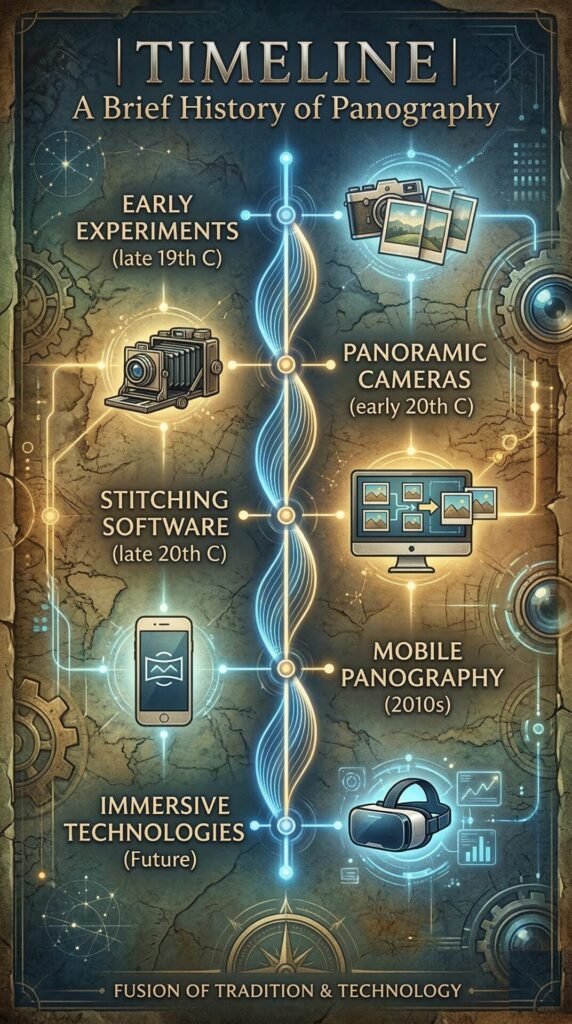
The history of panography is a journey through innovation and imagination, shaped by artists and inventors who refused to accept the limits of a narrow frame. From the monumental painted panoramas that surrounded viewers in 18th‑century rotundas to the shimmering precision of daguerreotypes, panoramic maps, and the ingenious mechanics of cameras like the Al‑Vista and the Cirkut, each era expanded the possibilities of how a place could be seen and understood.
These early breakthroughs did more than refine technique—they reshaped perception. They taught generations of artists to honor the full sweep of the horizon, to value context as much as subject, and to see the world as a continuous, unfolding environment rather than a collection of isolated scenes. The legacy of these innovations lives on in modern panoramic and 360‑degree photography, in digital stitching, in immersive environments, and in every creative explorer who turns slowly toward the horizon to capture the total view.
Panography’s foundations are wide‑angled and deeply human. They remind us that the desire to see more—to understand a place in its entirety—has always been part of our creative impulse.