Table of Contents
The View of Madison, Ind. by Gorgas & Mulvey, created around 1866, stands as an exceptional example of panography during the mid-19th century. This albumen silver print, measuring 13.5 x 38 inches and cataloged as “PAN US GEOG – Indiana, no. 19,” captures the serene charm of Madison, Indiana, in striking detail. The photograph serves as both an artistic triumph and a historical record, embodying the ingenuity and dedication of early panoramic photographers.



Madison, Indiana: A Jewel on the Banks of the Ohio River
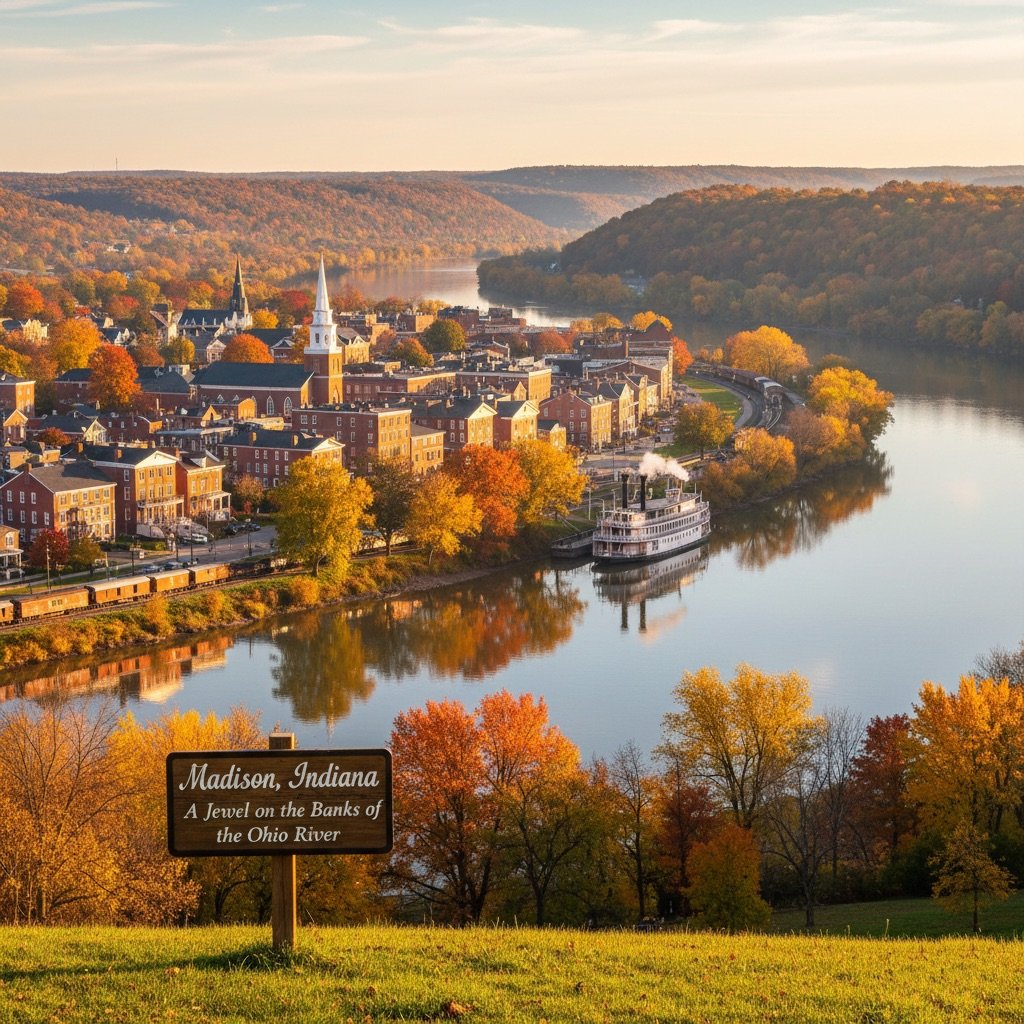
Madison, nestled along the Ohio River, was a bustling hub of trade and industry in the mid‑19th century—a river town shaped by movement, commerce, and the steady rhythm of steamboats drifting past its shores. Its long waterfront, framed by rolling hills and a growing architectural core, offered a natural stage for panoramic photography. The town’s blend of industry and beauty made it an irresistible subject for photographers seeking to capture both the character and the expanse of place.

Why Madison Inspired Panographic Works
Scenic Beauty — Madison’s landscape offered a rare harmony between natural and built environments. The Ohio River curved gently along the town’s edge, reflecting warehouses, church spires, and hillside homes in its shifting light. The surrounding hills created a layered backdrop that lent itself perfectly to wide‑format seeing, allowing photographers to compose sweeping arcs that revealed the town’s full spatial story.
Historical Significance — During the 19th century, Madison stood as one of Indiana’s most important river ports, a crossroads of transportation, trade, and cultural exchange. Its prominence made it a focal point for documentation, and panoramic photography became a way to record its growth, ambition, and evolving identity. Capturing Madison in a single, continuous sweep allowed photographers to preserve not just its structures, but the atmosphere of a community shaped by the river’s constant flow.
Madison’s combination of beauty, industry, and geographic drama made it an ideal canvas for early panographers—an American town whose story was best told in the wide view.
The Photographic Genius of Gorgas & Mulvey
Crafting the Panorama
Gorgas & Mulvey, renowned photographers of the era, employed the albumen silver print technique to create panoramic views of exceptional richness and tonal depth. Their work stands out not only for its technical precision but for the way it translates the lived character of a place into a continuous visual arc. Each segment of their panorama was composed with deliberate care—foreground structures aligned, distant hills balanced, atmospheric haze rendered with a painter’s sensitivity.
Their meticulous approach to panography resulted in an expansive composition that showcased Madison’s unique landscape with remarkable clarity. The city’s shoreline, architectural clusters, and rolling terrain were woven together into a single, sweeping narrative. In their hands, the panorama became more than documentation; it became a portrait of place, shaped by patience, craft, and an instinct for the wide‑angle truth of a growing American city.
Technical Highlights
- Albumen Silver Process: Known for its richness in detail and tonal quality, this technique enhanced the panoramic scope of the print.
- Wide Dimensions: The 13.5 x 38-inch proportions allowed the photographers to capture a sweeping view of Madison’s riverbanks, architecture, and distant hills.
What Makes This Panographic Work Exceptional
- Precision: The alignment and seamless blending of the panoramic elements reflect the advanced skills of Gorgas & Mulvey.
- Storytelling: The image provides a narrative of Madison’s bustling economy, cultural vibrancy, and natural beauty during the post-Civil War era.
- Enduring Impact: As a historical artifact, it preserves the spirit of a bygone era for future generations to appreciate.
Cultural Significance of Panography in the 19th Century
Panographic photography, like the View of Madison, Ind., played a pivotal role in documenting America’s development during the 19th century. These sweeping images captured more than scenery—they recorded the momentum of a nation in transition. Expanding towns, new industries, shifting transportation routes, and the architectural ambitions of a growing country were all preserved in wide‑format form, offering a perspective that single‑frame photography simply could not provide.
Panoramas became tools for storytelling, innovation, and historical preservation. They revealed how communities organized themselves across space, how landscapes were reshaped by commerce, and how cultural identity took form along riverbanks, rail lines, and rising city blocks. In an era defined by movement and expansion, panography offered a way to see the full arc of change, honoring both the human activity and the surrounding environment that shaped the American experience.
Why Panography Thrived
- Technological Advancements: Techniques like the albumen silver process elevated photography to new artistic heights.
- Public Interest: Panoramas captured the imagination of audiences, offering immersive perspectives on urban growth and natural wonders.

 Panography.org | REFERENCE LIBRARY
Your Daily Prompt | Grow Your Panoramic Style
Engage your "panoramic eye" with a new daily challenge. These prompts act as a creative spark to help you see the world's potential in the wide format.
Conclusion: A Vision of History Through Panography
Gorgas & Mulvey’s View of Madison, Ind. is a testament to the power of panography to capture the essence of a time and place. Their sweeping composition preserves not only the architecture and geography of Madison, but the atmosphere of a river town alive with movement, ambition, and cultural identity. The clarity of their albumen prints, the precision of their alignment, and the sensitivity of their wide‑format seeing reveal a mastery that elevates the panorama from documentation to interpretation.
This work stands as a true gem in the annals of panoramic photography—an image that bridges artistry and history. It reminds us how early panographers expanded the boundaries of visual storytelling, using the wide view to honor the full breadth of a landscape and the lived experience within it. As we look back on their achievement, we see the pioneering spirit that shaped the art of panography and deepened our understanding of the past, one horizon‑length sweep at a time.