Table of Contents
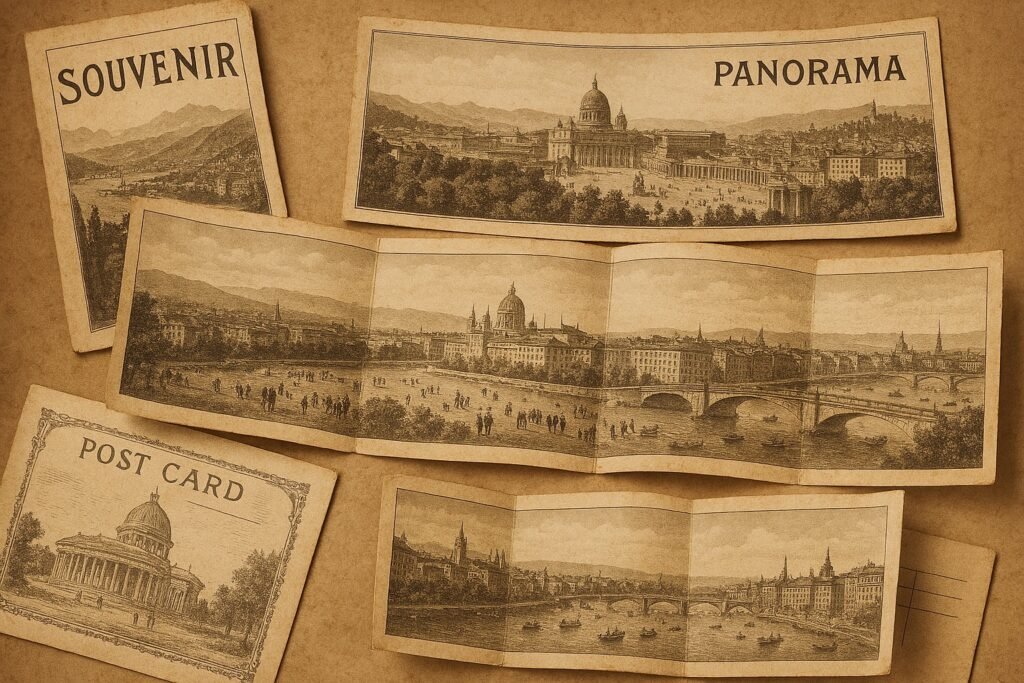
Panoramas have always been more than wide pictures. Long before digital stitching and immersive 360° views, panoramic images shaped how travelers understood the world — and how they carried pieces of it home. In the early days of tourism, panoramas appeared in souvenirs, folding prints, travel albums, and postcards, offering visitors a way to hold an entire horizon in their hands. These wide‑format images didn’t just document destinations; they helped define them, turning landscapes, cityscapes, and cultural landmarks into icons of travel culture.
For photographers who see the world through a panoramic lens, the history of these early souvenirs reveals something familiar: the desire to compress experience into a single, sweeping frame. The same instinct that drives modern panography — capturing place, culture, and environment in one continuous view — was already alive in the travelers of the 19th and early 20th centuries.
The Rise of Panoramas in Early Travel Culture
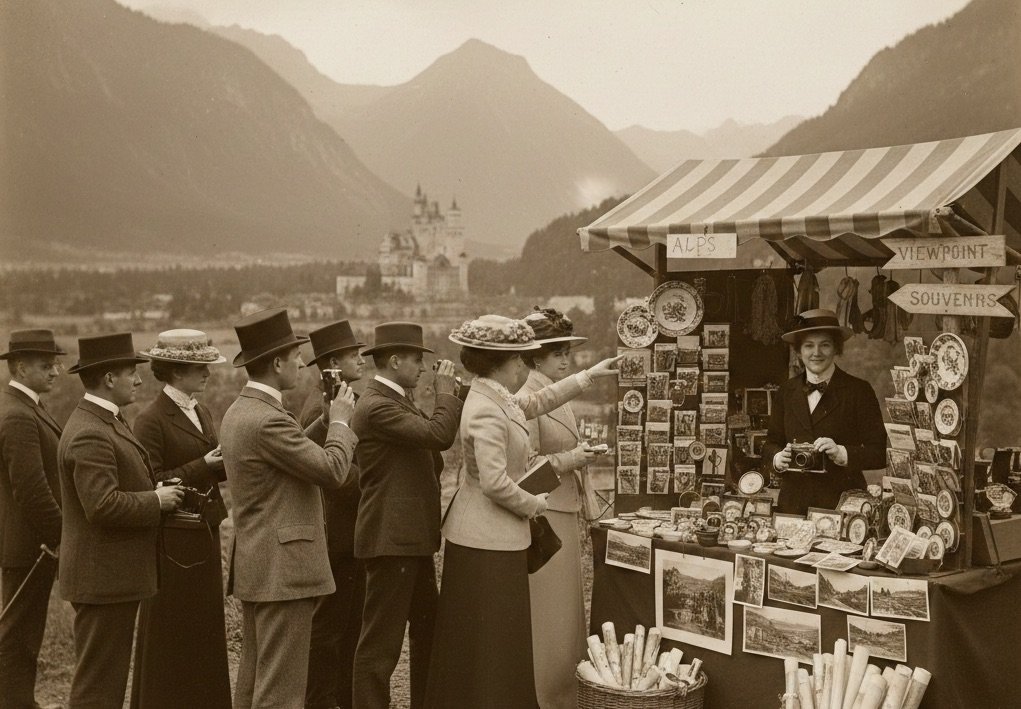
As tourism expanded in the late 1800s and early 1900s, panoramas became a popular way to represent destinations. Travelers wanted images that conveyed scale — the sweep of a coastline, the expanse of a mountain range, the density of a growing city. A single photograph often felt too narrow, too selective. Panoramas offered something closer to memory: a wide, atmospheric impression of being there.
Early panoramas appeared in:
- Folding souvenir prints sold near scenic overlooks
- Travel albums documenting grand tours
- Illustrated guidebooks and railway brochures
- Postcards featuring long, stitched city views
- Panoramic lithographs displayed in hotels and train stations
These images were not just keepsakes; they were cultural artifacts that shaped how destinations were imagined. A panoramic postcard of a harbor or skyline became a visual shorthand for the place itself, influencing how travelers remembered — and how future visitors anticipated — the experience.
Why Panoramas Became Essential Souvenirs
Panoramas resonated with early tourists because they captured something ordinary photographs couldn’t: the feeling of standing in a place. Wide‑format images conveyed atmosphere, scale, and orientation. They showed how a city opened toward the water, how a mountain range curved across the horizon, how a plaza connected to the streets around it.
Panoramas became essential souvenirs because they:
- Represented the full sweep of a destination
- Offered a sense of immersion and spatial context
- Felt more “complete” than single‑frame images
- Captured iconic views in a way that matched memory
- Served as decorative keepsakes for home display
Travelers often displayed panoramic prints on mantels, in parlors, or inside albums, treating them as proof of experience — a visual record of having stood in a place that felt larger than life.
Panoramic Postcards and the Birth of Wide‑Format Travel Imagery
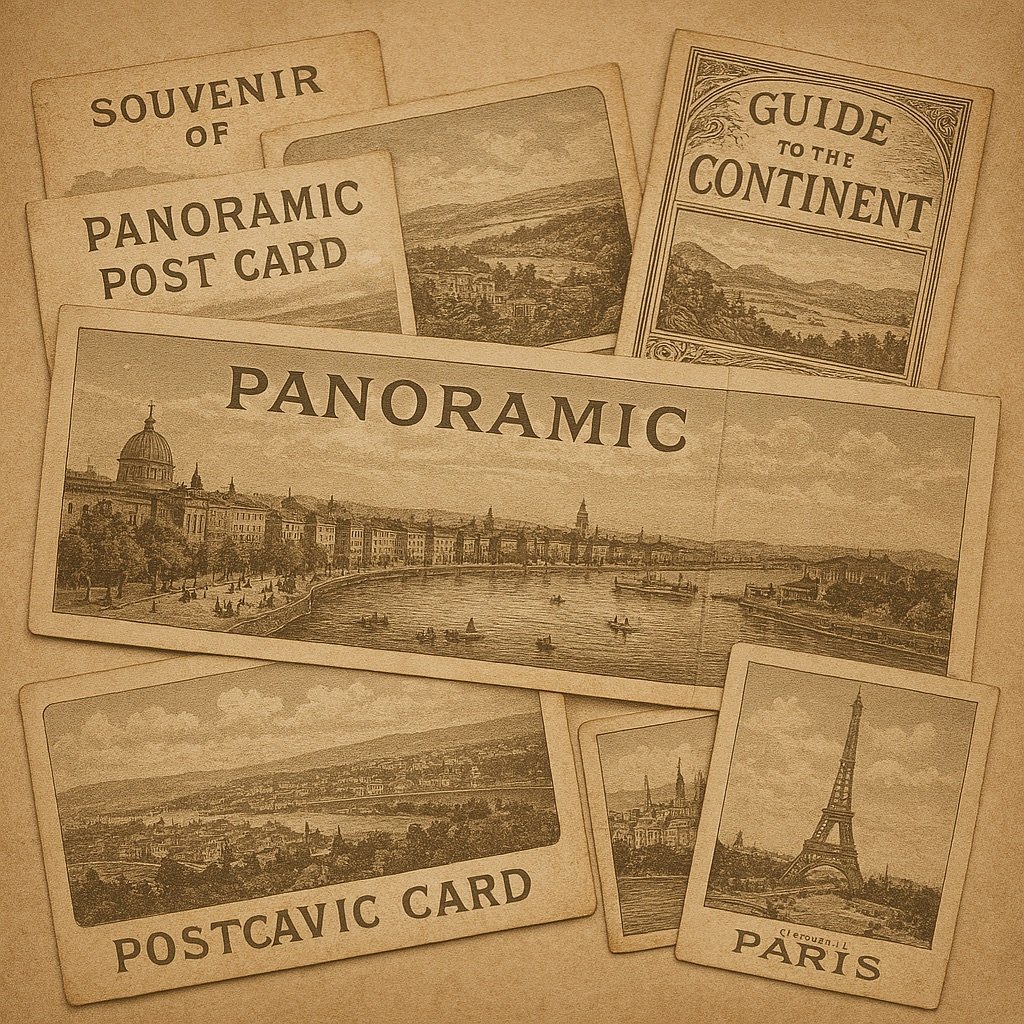
Postcards were one of the most influential mediums for panoramic photography. As tourism boomed, postcard publishers realized that wide views sold exceptionally well. They printed elongated cards featuring:
- City skylines
- Mountain passes
- Coastal promenades
- Railway stations
- National parks
- Famous boulevards
These panoramic postcards often folded out to double or triple their length, creating a miniature scroll of the destination. Travelers mailed them home as both communication and display — a way to share the experience of place with friends and family.
For many people, these postcards were their first exposure to faraway landscapes. The panoramic format made distant places feel expansive and inviting, fueling curiosity and wanderlust.
How Early Panoramas Shaped Destination Identity
Panoramas didn’t just document destinations; they helped define them. A panoramic view of a city from a hilltop or harbor became the “official” image of that place, reproduced in guidebooks, posters, and souvenirs. These wide views shaped public imagination, influencing how travelers expected a destination to look and feel.
Panoramas shaped destination identity by:
- Highlighting iconic features — bridges, towers, waterfronts
- Establishing visual narratives — growth, modernity, natural beauty
- Reinforcing cultural landmarks — plazas, temples, monuments
- Creating recognizable silhouettes — skylines and mountain ridges
Even today, many cities still rely on panoramic imagery for tourism marketing, echoing the visual traditions established more than a century ago.
The Photographer’s Perspective: Seeing Travel Through a Wide Lens
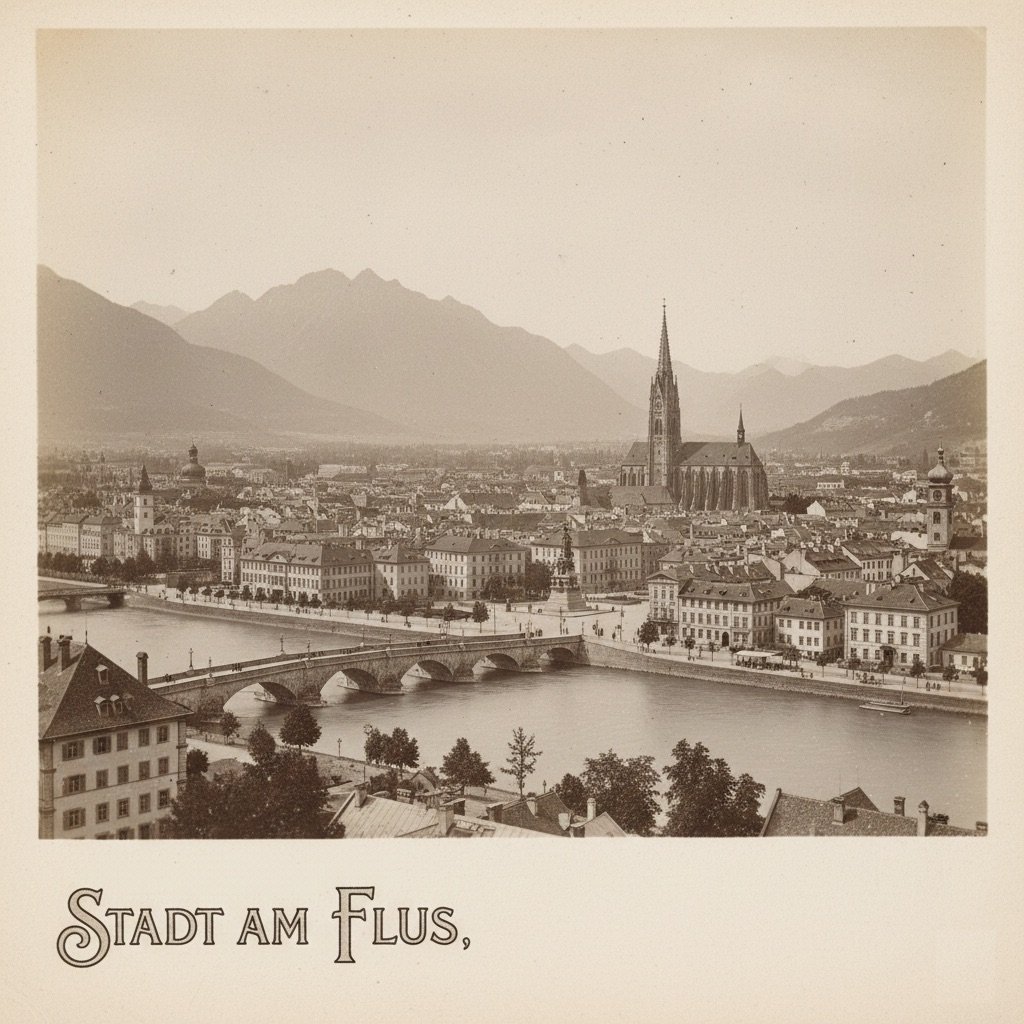
As a panoramic photographer, I often feel connected to these early creators. Their instinct to widen the frame mirrors the way I approach place — not as a single moment, but as a continuous experience. When I stand on a cliff, in a museum courtyard, or at the edge of a city square, I’m drawn to the full sweep of the environment. I want to capture the way the horizon curves, how the light moves across surfaces, how culture and landscape intersect.
Wide‑format seeing is a way of honoring place. It acknowledges that no single frame can contain the complexity of a destination. Early tourists understood this intuitively, which is why panoramas became such cherished souvenirs.
Panoramas as Cultural Memory
Panoramic souvenirs served as early forms of visual storytelling. They preserved not just what a place looked like, but how it felt to stand within it. These images became part of cultural memory, shaping how generations understood travel.
Panoramas preserved:
- The atmosphere of early cities
- The openness of landscapes before development
- The character of historic streets and waterfronts
- The relationship between people and environment
For modern photographers, these early panoramas offer a window into the past — a reminder that wide‑format imagery has always been tied to exploration, curiosity, and the desire to understand the world through place.
The Legacy of Panoramas in Modern Travel Photography
Today’s panoramic photography — from stitched digital images to immersive 360° views — continues the legacy of early travel panoramas. The tools have changed, but the impulse remains the same: to capture the full experience of being somewhere.
Modern panography echoes early tourism in several ways:
- It emphasizes immersion and spatial awareness
- It celebrates the relationship between culture and environment
- It transforms destinations into visual narratives
- It invites viewers to step inside the frame
Whether displayed online, printed as wall art, or shared as digital postcards, panoramas remain one of the most powerful ways to communicate place.
Frequently Asked Questions
Why were panoramas popular in early tourism?
They offered a wide, immersive view that matched travelers’ memories and conveyed the scale of destinations better than single‑frame images.
How were panoramic postcards made?
Publishers used elongated prints or folding cards to reproduce wide photographs, often stitched or illustrated to show full horizons.
What kinds of places were commonly shown in early panoramas?
City skylines, harbors, mountain ranges, national parks, and major cultural landmarks were the most popular subjects.
Did panoramas influence how destinations were perceived?
Yes — panoramic images helped define the visual identity of cities and landscapes, shaping public imagination and tourism marketing.
How does modern panoramic photography relate to early travel imagery?
Today’s panoramas continue the tradition of capturing immersive, wide‑format views that express the atmosphere and character of a place.

 Panography.org | PANORAMA STYLES & APPROACHES
Aerial Panoramas | Expanding the Vertical Dimension
Transcend the ground-level view and embrace the majesty of the sky. This perspective reimagines the horizon by adding a breathtaking sense of height.
Final Thoughts
Panoramas have always been tied to the spirit of travel. From early souvenir prints to modern digital panography, wide‑format imagery helps us understand place in a way that feels expansive, atmospheric, and deeply human. Early tourists used panoramas to carry horizons home; today, we use them to share experiences, document journeys, and explore the world through a lens that honors its full complexity.
Panoramas remind us that travel is not just about seeing — it’s about immersing, remembering, and connecting with the landscapes and cultures that shape our journeys.