Table of Contents
Panography has always belonged to those who crave the full sweep of a place—the curve of a coastline, the rise of a skyline, the quiet geometry of a desert road stretching toward heat‑blurred horizons. As a travel‑minded art curator, I’ve long believed that panoramic seeing is not just a technique but a way of moving through the world. It asks us to slow down, to widen our attention, and to let landscapes, cities, and cultural spaces unfold in their natural rhythm.
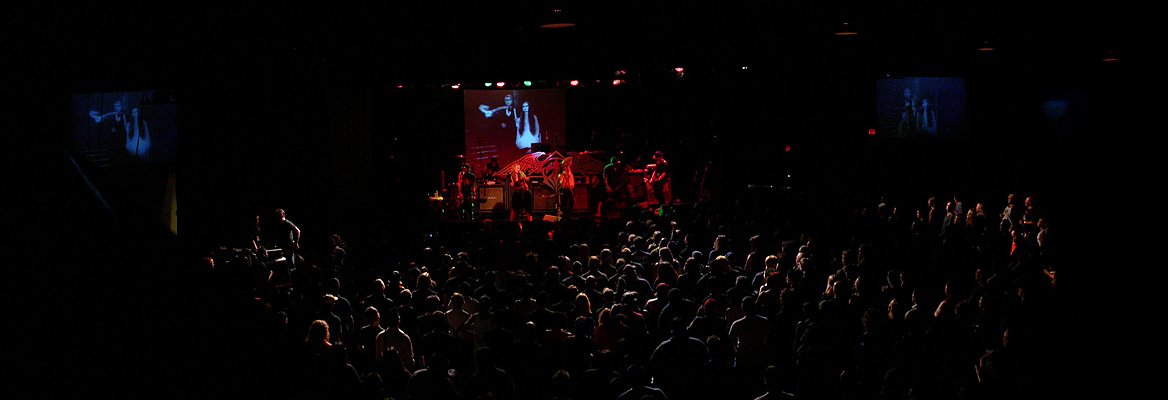
credit: jasonjpogodzinski
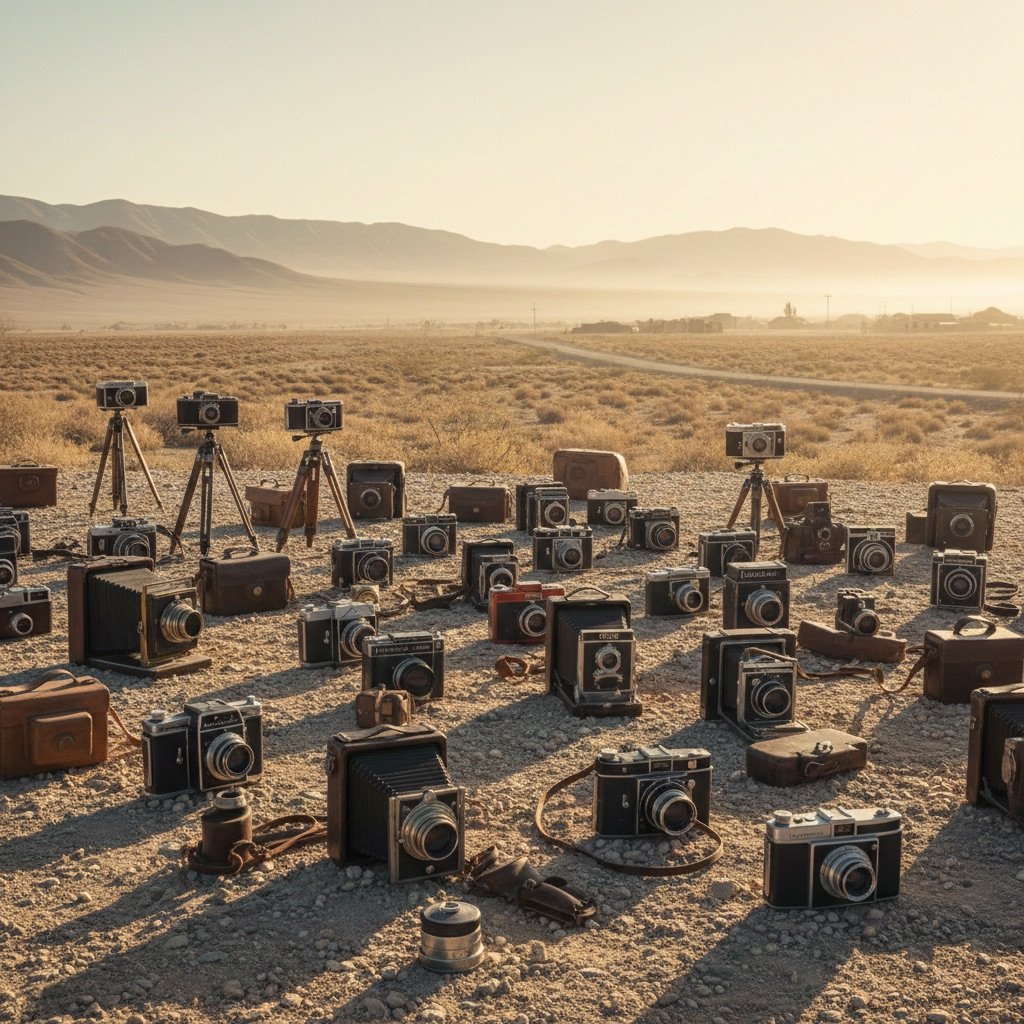
Today’s panographers inherit a lineage of remarkable cameras—mechanical, optical, and digital—that were designed to honor this expansive way of seeing. From early rotational devices to modern mirrorless systems, each tool carries its own philosophy of space, perspective, and immersion. Below is a deep exploration of the cameras that shaped panography and continue to inspire artists who work in wide format.
The Evolution of Cameras Designed for Panography
Panography has never been a single method. It has been a shifting conversation between technology and perception, shaped by the needs of explorers, documentarians, artists, and travelers. The cameras below represent milestones in that conversation—each one expanding what it means to capture the world in panoramic form.
Stereo Cyclographe: Early Panoramic Depth and Dimensionality



The Stereo Cyclographe occupies a special place in the history of panoramic imaging. Built during a period when photographers were experimenting with both breadth and depth, this camera fused wide‑angle rotation with stereoscopic pairing. Instead of offering a single sweep of the horizon, it produced dual images that, when viewed together, created a subtle three‑dimensional effect.
For traveling artists, the Stereo Cyclographe feels like an early attempt to replicate the sensation of standing inside a place rather than simply looking at it. Its paired exposures mimic the way our eyes gather spatial information—an approach that resonates with modern immersive photography and VR‑inspired panoramas.
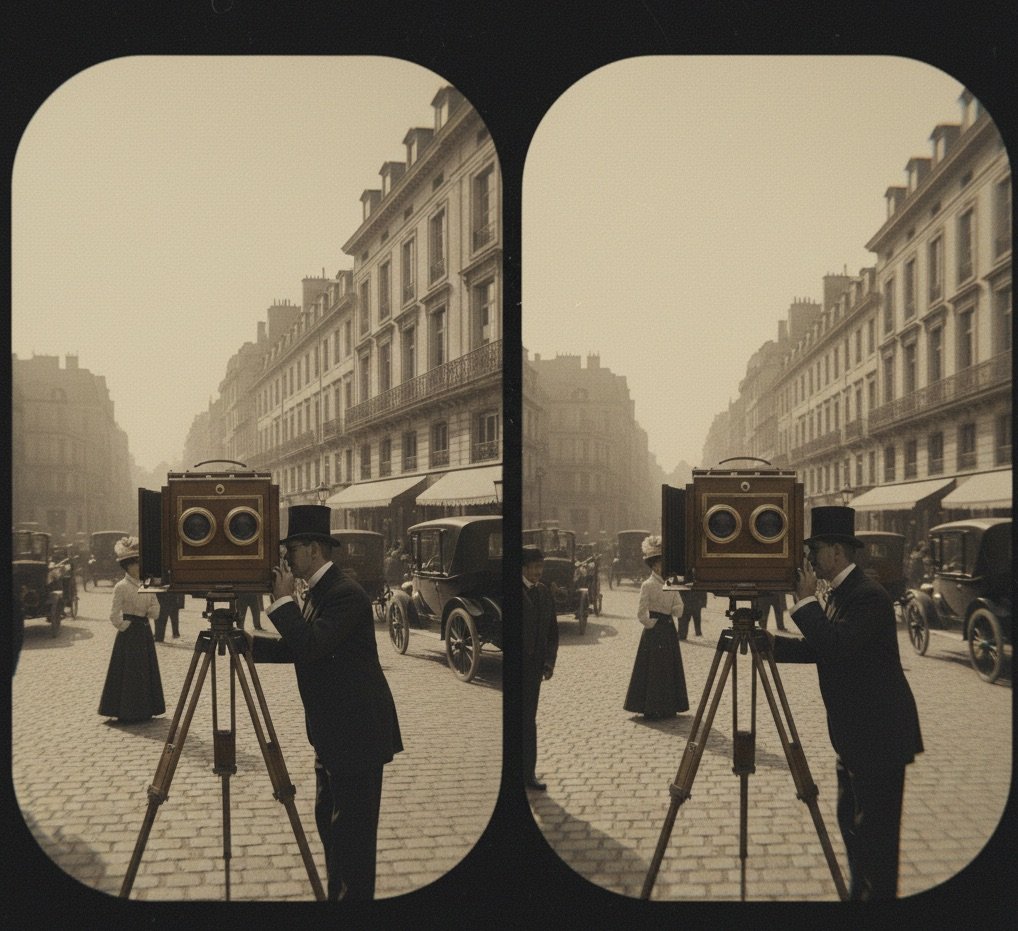
The camera’s slow, deliberate rotation also encouraged a contemplative relationship with the environment. Whether used along coastal promenades, mountain passes, or bustling 19th‑century boulevards, the Stereo Cyclographe invited photographers to witness the world as a layered, living panorama.
Wonder Panoramic Camera: Short‑Rotation Precision for Seamless Horizons
The Wonder Panoramic Camera introduced a new level of mechanical elegance to early panography. Its short‑rotation design minimized distortion, allowing photographers to capture sweeping scenes without the exaggerated curvature common in early panoramic attempts.
This camera excelled in:
- Architectural panoramas, where straight lines and structural rhythm mattered
- Landscape compositions, especially those with layered depth
- Urban environments, where clarity and continuity were essential
Its engineering made it a favorite among artists who wanted to preserve the integrity of a place without sacrificing the emotional sweep of a wide‑format view. Even today, its influence can be felt in modern panoramic tools that prioritize clean stitching and natural perspective.
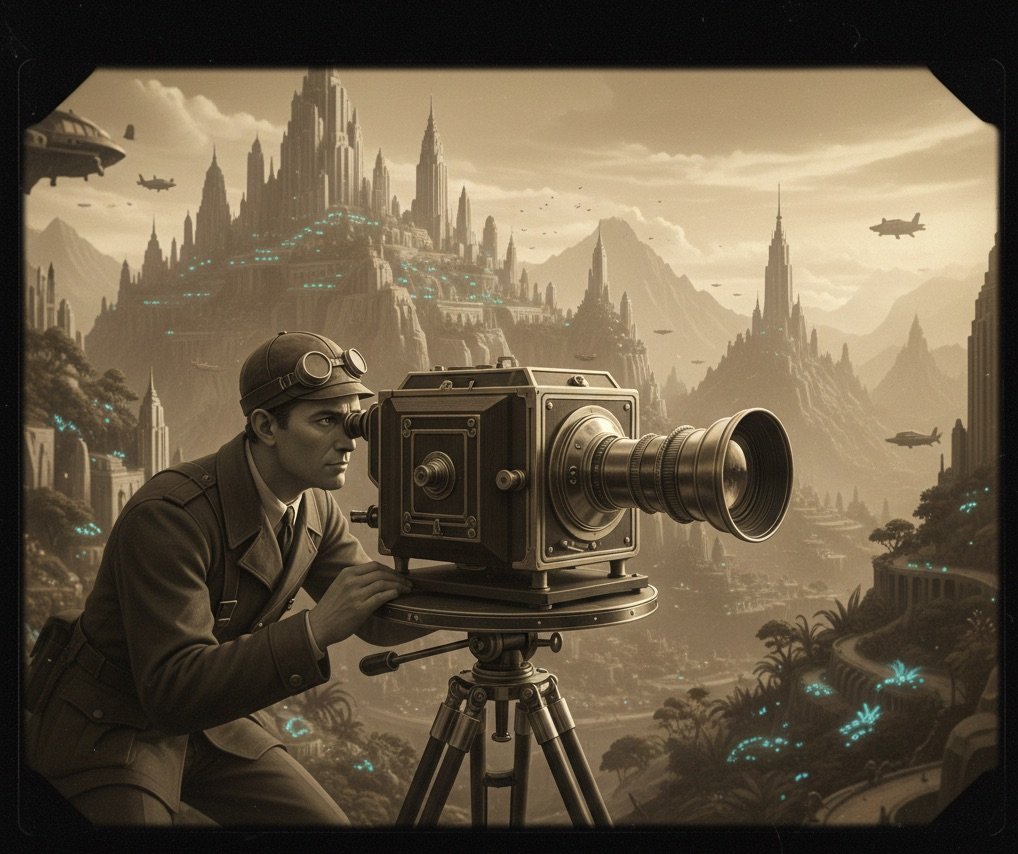
For the traveling curator, the Wonder Panoramic Camera represents a bridge between technical precision and atmospheric storytelling—a reminder that the best panoramas honor both geometry and mood.
Periphote Camera: Full‑Rotation Panography and the 360‑Degree Experience
If the Wonder Panoramic Camera refined the horizontal sweep, the Periphote Camera expanded it into a full circle. Designed for complete 360‑degree rotation, the Periphote created immersive cylindrical panoramas that wrapped the viewer inside the environment.
Its strengths included:
- Uniform exposure, even in shifting light
- Flawless mechanical stitching, rare for its era
- A sense of total spatial immersion, ideal for skylines and natural vistas
The Periphote was a favorite among early explorers and urban documentarians who wanted to capture not just a view, but an entire moment in space. Standing inside a Periphote panorama feels like stepping into a time capsule—one that preserves the atmosphere, architecture, and cultural texture of a place.
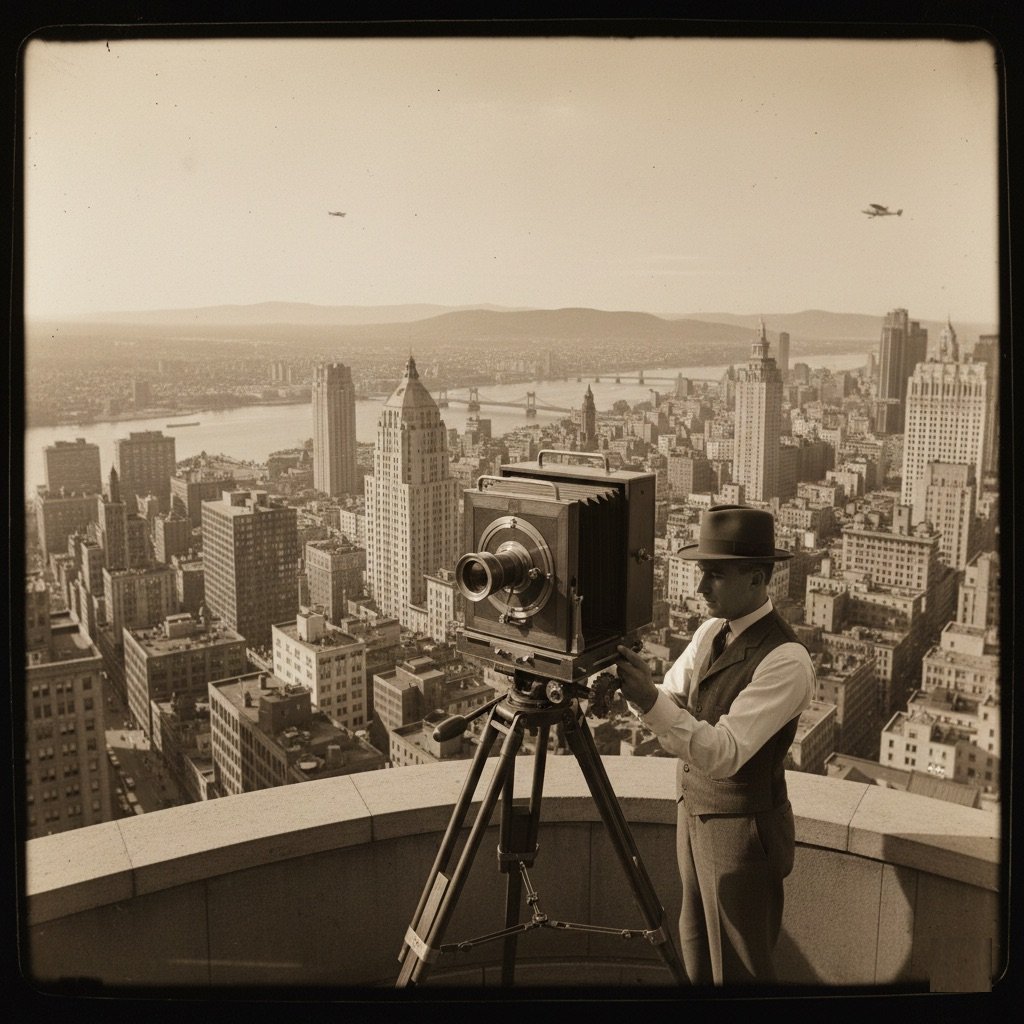
For modern panographers, the Periphote’s legacy lives on in 360‑degree digital imaging, VR mapping, and immersive travel photography.
Modern Digital Cameras: The New Frontier of Panographic Expression
While early panoramic cameras relied on mechanical rotation, today’s panographers work with DSLRs, mirrorless systems, and computational tools that offer unprecedented flexibility. Modern cameras allow artists to blend traditional panoramic techniques with experimental approaches—layering exposures, stitching handheld sequences, or creating abstract composites that reinterpret place.
Key advantages of modern digital systems include:
- High‑resolution sensors for detailed wide‑format imagery
- Interchangeable lenses, from ultra‑wide primes to tilt‑shift optics
- Manual exposure control, essential for consistent stitching
- RAW capture, preserving tonal range across expansive scenes
- In‑camera panorama modes, useful for quick field studies
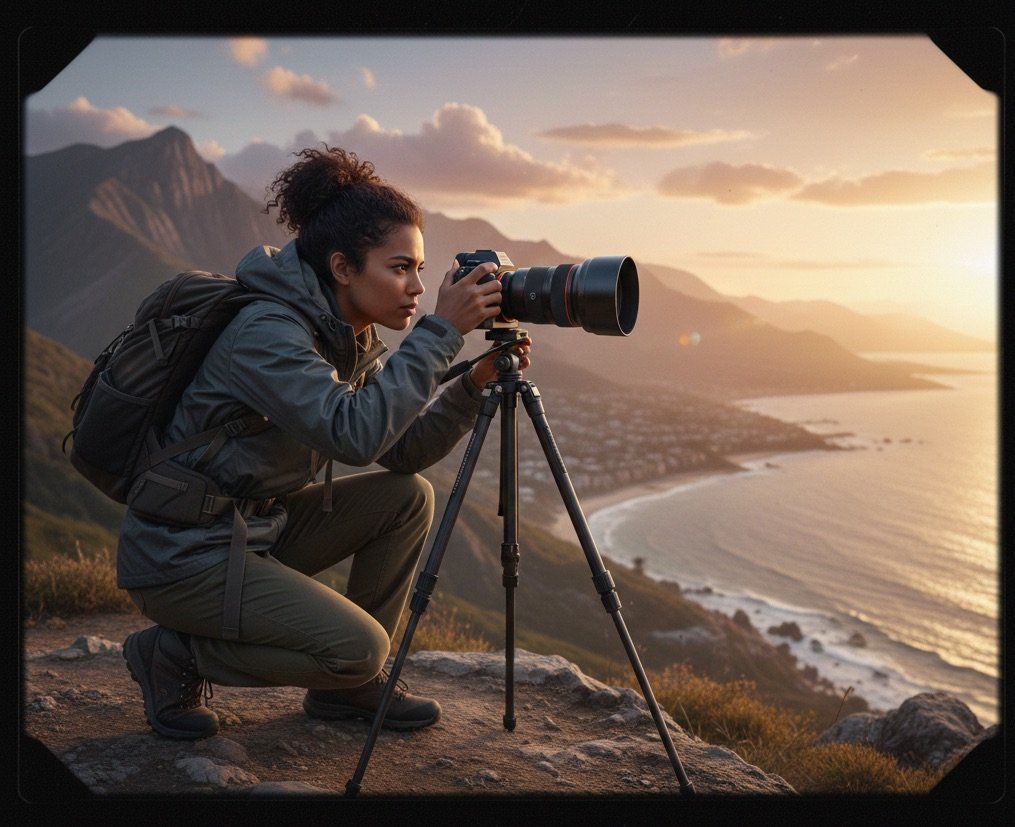
Digital panography is not just about documenting a place—it’s about interpreting it. Whether you’re capturing the soft morning light over desert mesas, the rhythmic density of a Tokyo street, or the layered blues of a coastal horizon, modern cameras give you the tools to shape your own panoramic language.
Recommended Models for Contemporary Panographers
While many cameras can be adapted for panoramic work, a few stand out for their reliability, dynamic range, and intuitive controls.
Canon EOS R Series
Canon’s mirrorless R bodies offer exceptional image quality, strong color science, and versatile lens options. Their ergonomic design makes them ideal for long days of travel and fieldwork.
Sony Alpha Series
Sony’s Alpha line is known for compact builds, impressive dynamic range, and fast autofocus—useful when capturing moving crowds, shifting weather, or fleeting light.
Nikon Z Series
Nikon’s Z cameras provide precise manual controls and excellent low‑light performance, making them a strong choice for dusk panoramas, interior spaces, and atmospheric cityscapes.
Each of these systems supports the kind of intentional, wide‑format seeing that panography demands.
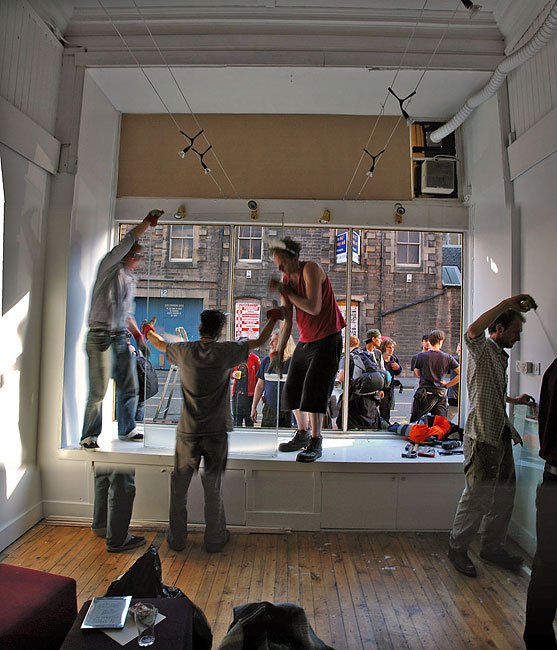
credit: jasonjpogodzinski
How Panographic Cameras Shape the Creative Experience
Panography is more than a technical exercise—it’s a way of engaging with place. The cameras designed for this purpose encourage artists to:
- Observe slowly, letting the environment reveal itself
- Compose expansively, thinking in arcs rather than rectangles
- Honor context, capturing not just a subject but its surroundings
- Blend documentation with interpretation, creating images that feel lived‑in and atmospheric
Whether you’re wandering through a museum courtyard, tracing the edge of a canyon, or navigating the layered streets of a historic district, panoramic tools help you translate the world’s breadth into visual form.
 Panography.org | CREATIVE INSPIRATION & VISUAL IDEAS
Urban Growth in the Wide | City Panoramas Expansive View
Observe the evolution of the modern metropolis. These cityscapes document the density and architectural ambition of our urban centers through the years.
Frequently Asked Questions
What makes a camera suitable for panography?
A good panographic camera offers consistent exposure, wide‑format capability, and the ability to maintain clarity across a broad field of view.
Do I need a specialized panoramic camera today?
Not necessarily—modern digital cameras can create excellent panoramas through stitching, though dedicated panoramic tools offer unique creative advantages.
Are 360‑degree cameras still relevant for artists?
Yes, especially for immersive storytelling, environmental documentation, and VR‑inspired compositions.
Which lens works best for panoramic photography?
Wide‑angle and standard primes are most common, though tilt‑shift lenses help maintain straight lines in architectural scenes.
Can I create panographic images without a tripod?
Yes, but a tripod improves alignment, exposure consistency, and overall image quality.
Final Thoughts
Panography invites us to widen our gaze and embrace the full character of a place—its textures, rhythms, and shifting atmospheres. The cameras designed for this purpose, from the Stereo Cyclographe to today’s mirrorless systems, reflect a long tradition of artists seeking to understand the world in its broadest dimensions.
As you travel—whether across continents or through your own familiar landscapes—these tools become companions in seeing. They help you gather not just images, but experiences: the sweep of a coastline, the hum of a city, the quiet expanse of open sky. In the end, panography is a celebration of presence, perspective, and the panoramic beauty of being fully in the world.