Table of Contents
The 20th century marked a turning point in the evolution of panoramic photography. As film technology matured, panoramic cameras became more accessible, more portable, and more expressive — opening new creative pathways for artists, travelers, and photographers who wanted to capture the world in wide, sweeping frames. This era bridged the gap between early mechanical panoramas and the digital panography we know today, shaping how we see landscapes, cities, and cultural environments through a panoramic lens.
For traveling artists and panoramic photographers, the transition to film panoramas wasn’t just a technical shift. It was a transformation in how space, movement, and atmosphere could be recorded. Film panoramas allowed creators to document horizons with a sense of immediacy and intimacy, preserving the feeling of standing in a place — wind, light, and all — in a single elongated frame.
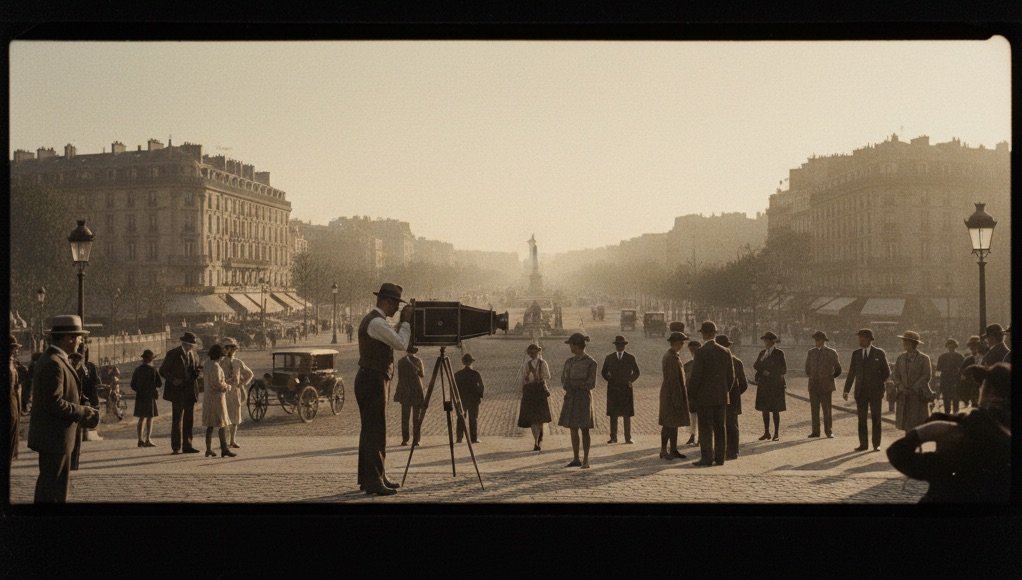
This page explores the innovations that defined 20th‑century film panoramas, the cameras that shaped the era, and how these wide‑format images continue to inspire panographic seeing today.
The Rise of Film Panoramas in the 20th Century
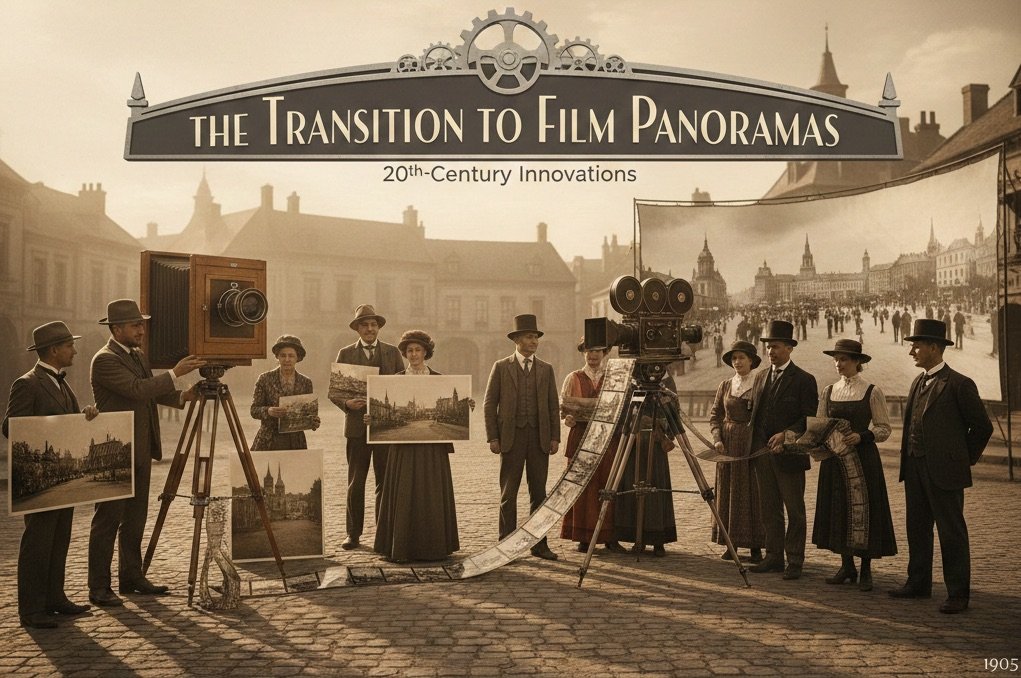
As film photography expanded in the early 1900s, panoramic cameras evolved from bulky, specialized devices into tools that artists and travelers could carry into the field. This shift democratized panoramic imagery, allowing more people to explore wide‑format storytelling.
A New Way of Seeing
Film panoramas introduced a fluid, cinematic way of capturing the world. Instead of stitching multiple images, rotating‑lens cameras and swing‑lens mechanisms created seamless panoramas in a single exposure. This allowed photographers to capture:
- sweeping landscapes
- bustling cityscapes
- architectural vistas
- cultural events and gatherings
The result was a new visual language — one that mirrored the experience of turning your head across a horizon.
Portability and Creative Freedom
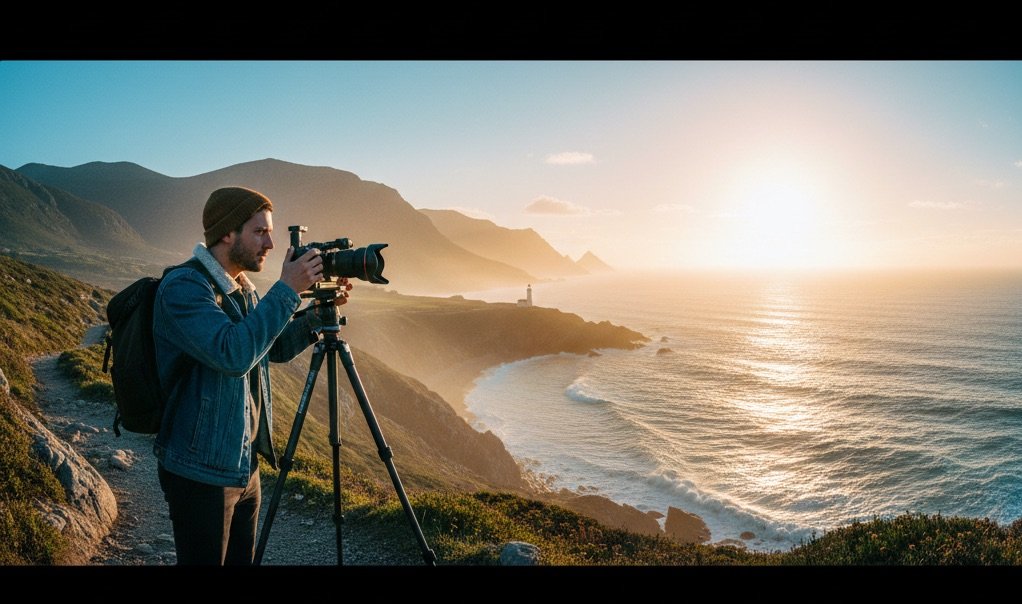
Earlier panoramic cameras were heavy and complex. Film‑based panoramic cameras, however, were designed for mobility. Travelers could carry them along mountain trails, riverbanks, coastal roads, and urban streets, capturing the world with spontaneity and artistic intention.
Key Innovations That Defined Film Panoramas
Rotating‑Lens Mechanisms



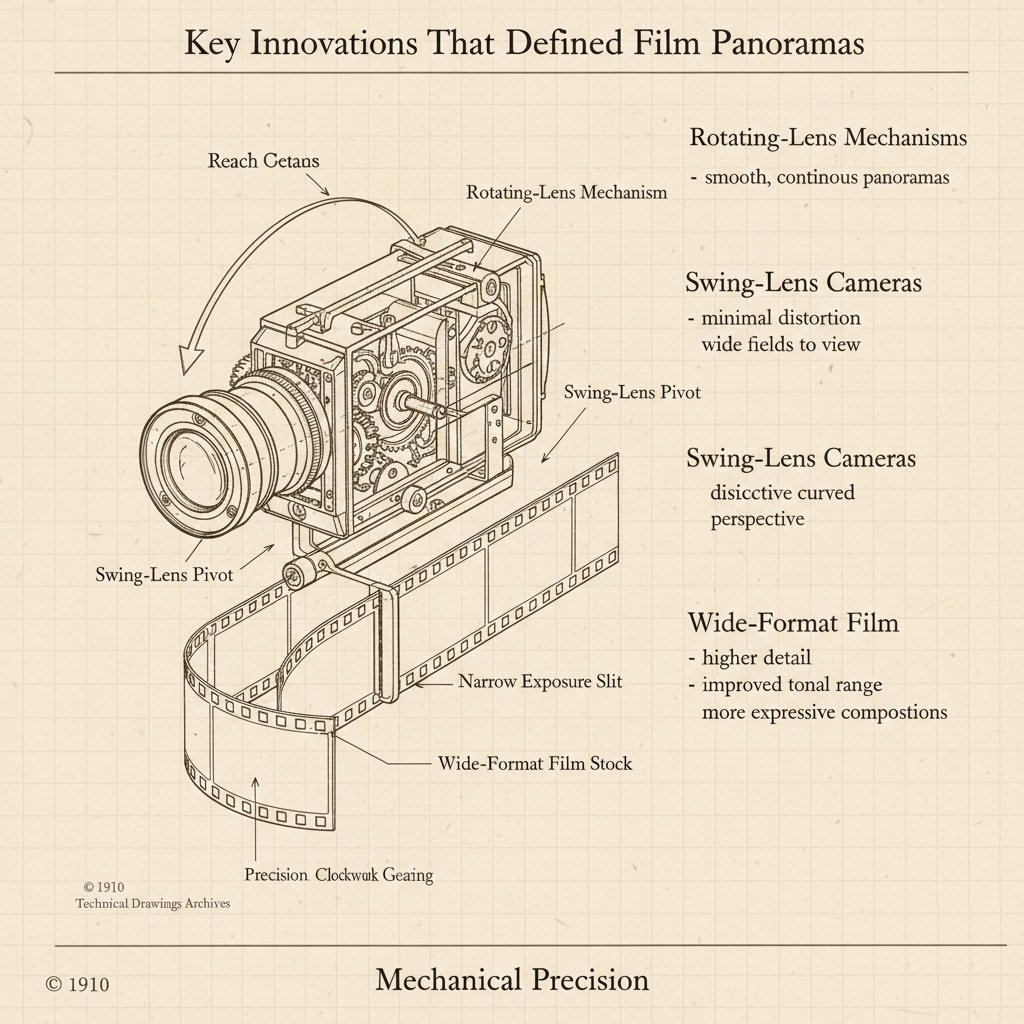
One of the most significant innovations was the rotating‑lens system. Instead of moving the entire camera, only the lens rotated, sweeping across the scene and exposing the film through a narrow slit. This created:
- smooth, continuous panoramas
- minimal distortion
- wide fields of view
This mechanism became the foundation for many iconic panoramic cameras of the century.
Swing‑Lens Cameras
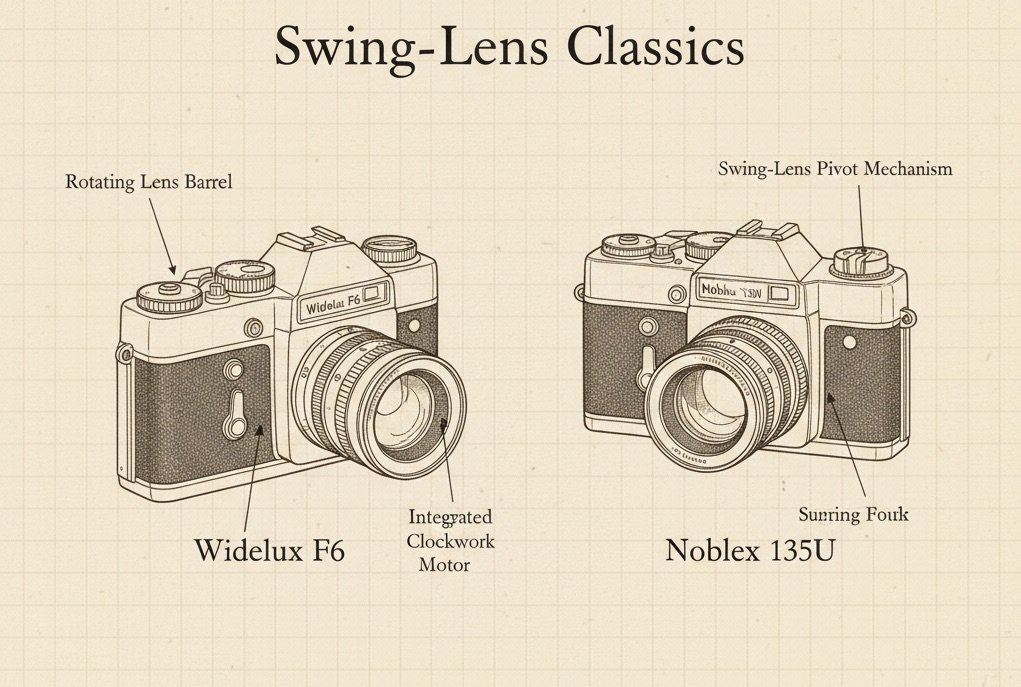
Swing‑lens cameras refined the rotating‑lens concept by allowing the lens to pivot in a controlled arc. These cameras produced images with a distinctive curved perspective — a look that many panoramic artists still admire today.
Wide‑Format Film
The introduction of wide‑format film stocks allowed for:
- higher resolution
- greater detail
- improved tonal range
- more expressive compositions
This made panoramic photography ideal for documenting landscapes, architecture, and cultural environments.
Mechanical Precision
20th‑century panoramic cameras were marvels of engineering. Their clockwork mechanisms ensured consistent movement, even exposure, and reliable results — essential for capturing long, continuous scenes.
Iconic Film Panoramic Cameras of the 20th Century
Swing‑Lens Classics
Cameras like the Widelux and Noblex became beloved tools for artists and travelers. Their sweeping lens movement created images with a sense of motion and curvature that felt almost cinematic.
Rotating‑Body Cameras
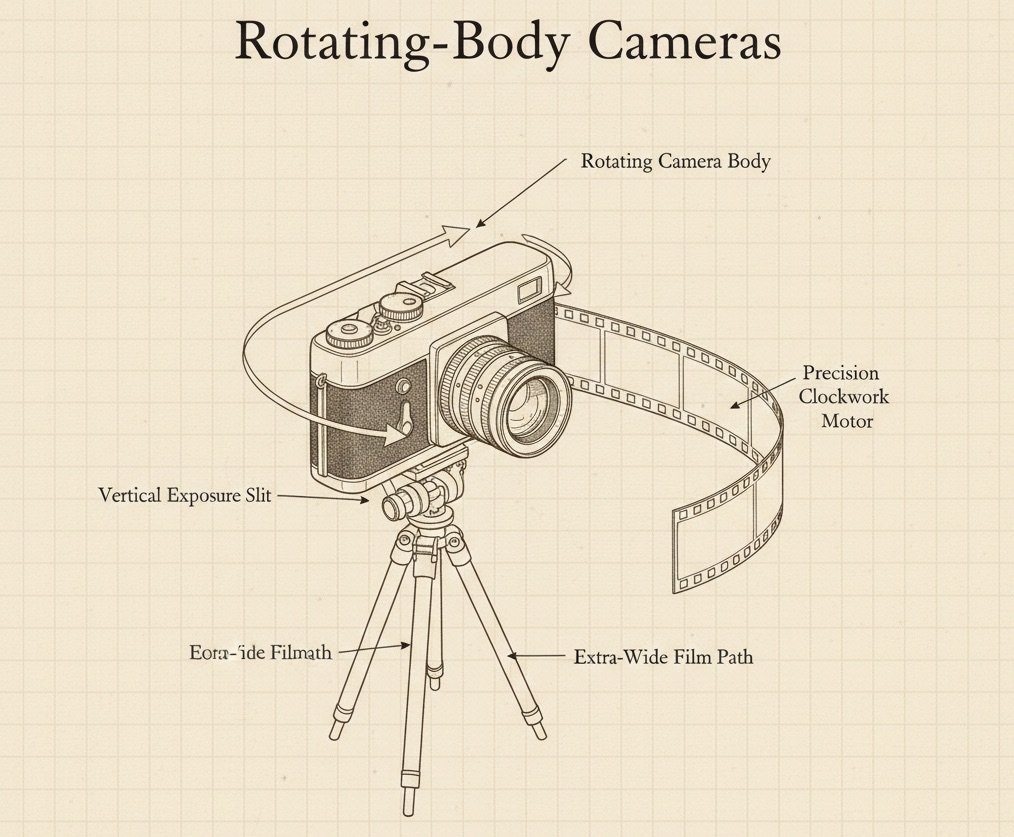
Some panoramic cameras rotated the entire body rather than just the lens. These devices produced extremely wide images, often approaching 360 degrees, making them ideal for documenting:
- expansive landscapes
- festivals
- parades
- architectural interiors
Medium‑Format Panoramic Cameras
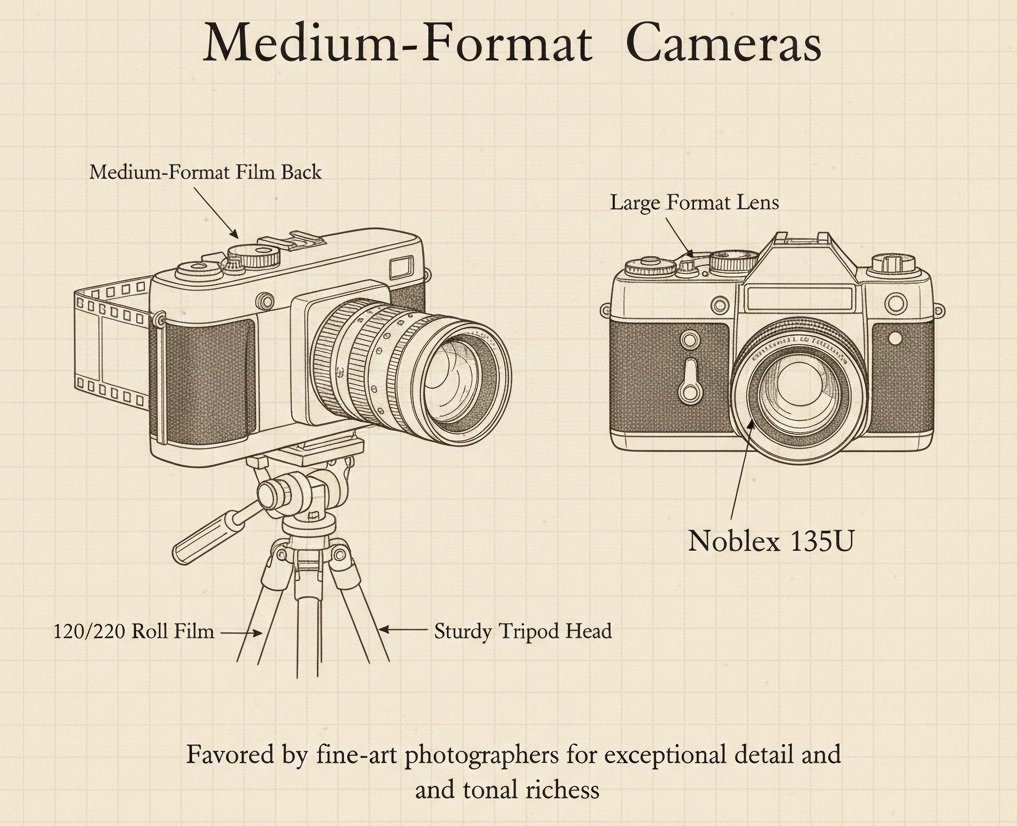
Medium‑format panoramic cameras offered exceptional detail and tonal richness. They were favored by fine‑art photographers who wanted to capture the world with clarity and depth.
Compact Panoramic Cameras
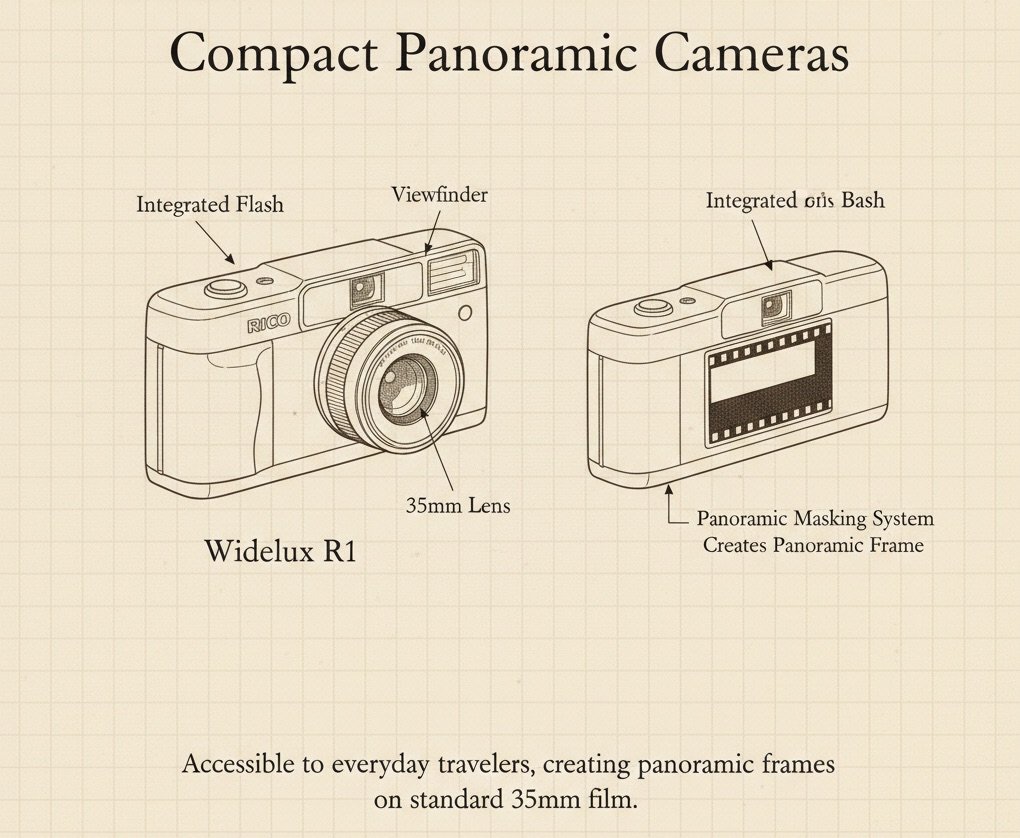
By the late 20th century, compact panoramic cameras made wide‑format photography accessible to everyday travelers. These cameras often used masking systems to create panoramic frames on standard 35mm film.
How Film Panoramas Changed Artistic and Cultural Documentation
Capturing the Spirit of Place
Film panoramas allowed photographers to record the feeling of being in a location — the sweep of a coastline, the rhythm of a market street, the expanse of a desert horizon. These images became cultural documents, preserving environments that were rapidly changing.
A Bridge Between Art and Travel
For traveling artists, film panoramas became visual journals. They captured:
- color palettes
- architectural patterns
- environmental textures
- atmospheric conditions
These images later informed sketchbooks, paintings, and mixed‑media works.
Expanding the Narrative
Panoramas offered a new storytelling format. Instead of isolating a single moment, they captured sequences — a visual narrative unfolding across space.
Panography and the Legacy of Film Panoramas
Film panoramas laid the groundwork for modern panography. The principles remain the same:
- wide‑format seeing
- spatial storytelling
- immersive composition
- attention to horizon, flow, and atmosphere
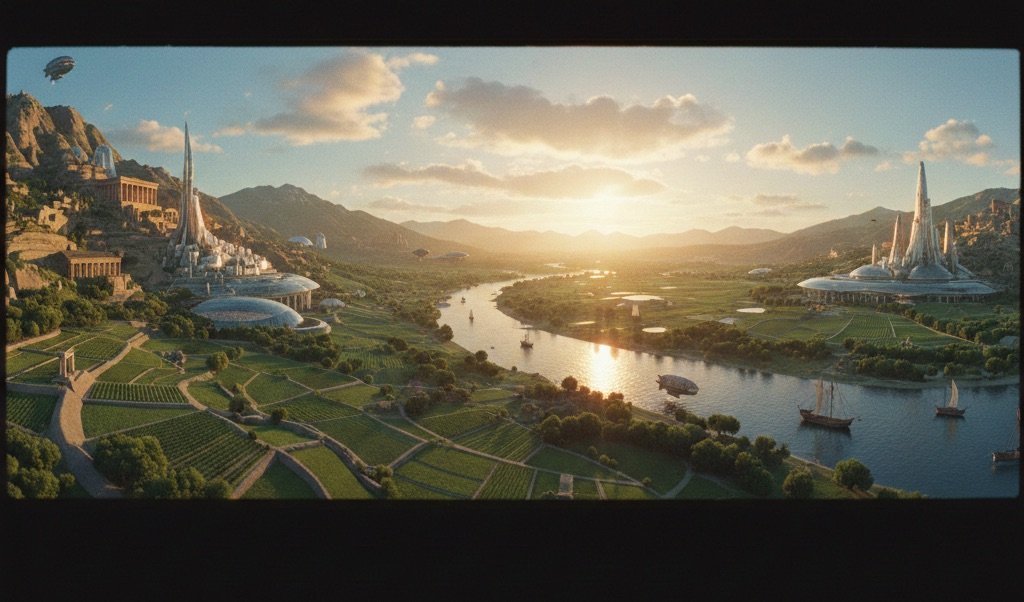
Today’s digital panography builds on the innovations of the 20th century, but the spirit remains rooted in the film era — a desire to capture the world in its full breadth.
Techniques Inspired by Film Panoramas
Embrace Movement
Film panoramas often included subtle motion blur from the rotating lens. Modern panographers can recreate this effect to add energy and atmosphere.
Look for Linear Spaces
Bridges, coastlines, riverwalks, and mountain ridges are ideal subjects — just as they were for film photographers.
Use Panoramas as Sketches
Film panoramas were often used as reference material for later artwork. Today, panoramic images can serve the same purpose for sketching, painting, or mixed‑media projects.
Capture Transitional Light
Film panoramas excelled at dawn, dusk, and fog — times when light shifts across the frame. These atmospheric conditions remain perfect for panoramic storytelling.
Frequently Asked Questions
Why were film panoramas important in the 20th century?
They made panoramic photography more accessible, portable, and expressive, allowing artists to capture wide‑format scenes with clarity and ease.
What made rotating‑lens cameras unique?
Their sweeping lens movement created seamless panoramas in a single exposure, producing smooth, continuous images.
Are film panoramic cameras still used today?
Yes — many artists and collectors still use them for their distinctive aesthetic and mechanical charm.
How did film panoramas influence modern panography?
They established the principles of wide‑format storytelling, spatial flow, and immersive composition that digital panography continues to build upon.
Can film panoramas be used for artistic reference?
Absolutely — their wide views make them excellent sources for sketching, painting, and studying spatial relationships.
Final Thoughts
The transition to film panoramas in the 20th century reshaped how artists and travelers documented the world. These innovations brought panoramic photography out of the studio and into the landscape, allowing creators to capture horizons with immediacy, emotion, and a sense of presence. Through rotating‑lens cameras, wide‑format film, and mechanical ingenuity, the century gave rise to a new visual language — one that continues to inspire panographers today.
Whether you’re exploring a coastal trail, wandering through a historic city, or standing before a mountain vista, the legacy of film panoramas invites you to look wider, think expansively, and create images that honor the spirit of place.